Sunday, 31
there are people around me who seem to hold on to an old image of who i am. they knew me years ago and appear to expect me to remain the same person. yet life does not stand still. every year brings new experiences, disappointments, discoveries, and insights. change is not a betrayal of who we once were; it is a natural consequence of being alive.
sometimes i feel judged for becoming different. at times, i sense envy or resistance from those who are more comfortable with the familiar version of me. it can feel as if i need permission to be who i am today, rather than who i was yesterday. some people seem unable or unwilling to see the path i have taken. they know that i am strong and have built a life in Africa, often under circumstances that would have discouraged many others. yet instead of wanting to understand my experience, they seem more interested in showing me what they have achieved. their attention flows toward themselves rather than toward a genuine encounter.
what i find difficult is not criticism itself, but the feeling of not being seen. it is as if they are speaking to a version of me that no longer exists. the person they remember belongs to another time, another set of circumstances, another understanding of the world.
i have changed, as everyone changes, whether visibly or invisibly.
these encounters often leave me feeling depleted. i notice how much energy it takes to remain centred in myself when others pull me toward old roles and expectations.
what they draw from me, i have to replenish. i have to find the strength again through my work, my thoughts, my creativity, my connection to the land and people around me, and through the quiet conviction that my life belongs to me.
yet, i cannot live according to expectations that were formed years ago. to do so would mean denying my own growth. as i grow older, i am learning to accept my transformation rather than defend it. i do not need permission to evolve. i do not need approval for becoming who i am becoming.
change is something all human beings share, whether they acknowledge it or not. the challenge is not to remain the same, but to continue becoming ourselves.
the task of maturity is to allow others their own image of us while simultaneously continuing on our own path. ultimately, my life has shaped me, and i owe it to myself to honour this journey instead of regressing into a version of myself that only conforms to the image others have of me.
Friday, 22
the economy of human relations
is one of the defining conditions of modern life. human interaction is no longer experienced as something that simply happens between people, but as a field of exchange, optimisation, and measurable value.
advice becomes consulting, companionship becomes networking, listening becomes coaching, and authenticity itself risks becoming a marketable skill. what once belonged to the informal sphere of human coexistence gradually enters the logic of economic calculation.
this transformation reaches beyond money itself. the deeper issue is not that people earn a living through conversation or guidance. humans have always exchanged services and knowledge. philosophers taught students, healers treated patients, mentors advised younger generations. what appears today is the expansion of economic logic into areas that were formerly protected from it. the modern individual encounters every human capacity as potential capital: empathy, attention, creativity, emotional intelligence, personal experience, trauma, vulnerability.
the phenomenon of coaching reveals this shift particularly clearly. coaches often offer something that was once embedded within friendship, communal life, or ordinary human maturity: encouragement, attentive listening, reassurance, orientation.
they are responding to a real social absence. modern societies have weakened traditional structures of belonging. families are fragmented, neighbourhoods anonymous, religious communities diminished, and work unstable. people experience themselves as isolated projects that must constantly manage and improve themselves. under such conditions, the demand for professional guidance becomes understandable. however, the coach does not merely listen; listening itself becomes a service. presence acquires a price. attention becomes billable time. the relationship is no longer grounded primarily in mutuality but in contract.
this development reflects a broader philosophical transformation described by thinkers of modernity. Karl Marx for example observed how capitalism turns human qualities into commodities. what matters is no longer the intrinsic character of an activity, but its exchange value. a person comes to be understood according to what they can produce, sell, or optimise. nowadays, human resources are a business.
in such a world, gratuitous acts become difficult to imagine. friendship traditionally belonged to this category. one listened because another person mattered, not because the hour generated income. the gift, hospitality, contemplation, conversation without purpose — all these forms of life resist economic reduction because their value cannot easily be measured.
modern culture, however, mistrusts activities without measurable outcome. time itself becomes moralised through productivity. to do something without purpose appears wasteful. even leisure is often reorganised into self-improvement. exercise becomes performance optimisation; meditation becomes stress management for increased efficiency; social relations become networking opportunities. the individual is subtly pressured to convert every aspect of existence into utility.
this pressure produces a peculiar impoverishment. when every activity is evaluated according to gain, the experience of simply being with others becomes fragile. human relations risk losing spontaneity. one begins unconsciously to ask: what do i gain from this interaction? is this useful? beneficial? strategic?
it would be naïve to romanticize the past. human relations have never been free of power, dependency, or exchange. the village priest, the elder, the healer, or the teacher occupied positions of authority. moreover, many forms of unpaid emotional labour historically fell disproportionately on women within families and communities. professionalisation can sometimes protect both sides by establishing boundaries and recognition for work that was previously invisible.
the question, therefore, is not whether money should disappear from human relations. the question is whether spaces can still exist that are not fully governed by economic logic. can there still be forms of attention that are not investments? can conversation remain something other than transaction? can one still act out of care, curiosity, friendship, or devotion without immediately translating these experiences into value?
the question becomes especially urgent in contemporary societies because economic rationality has become so successful. capitalism no longer merely organises production; it shapes imagination itself. people learn to perceive themselves through the categories of performance, branding, visibility, and optimisation. under such conditions, the desire to escape calculation risks becoming again another lifestyle product.
and yet the persistence of art, friendship, love, and contemplation suggests that something resists commodification — moments in which human beings encounter one another outside measurable exchange: a conversation, an act of generosity, shared silence, the making of something whose worth cannot be quantified. such moments may appear economically useless, yet they often constitute the deepest experiences of meaning.
Tuesday, 19
since arriving in Hamburg for my mother's 90th birthday, it almost feels as though i've been on vacation. in fact, not much comes to mind. the inspiration i carried from Venice seems to have faded for now, though i hope it will resurface once i'm back in The Gambia. the catalog remains unopened in my suitcase, protected for the journey home. over the past week, i've been seeing friends and family. the conversations, the memories, and shared histories have been stimulating in a social sense, though different from the solitary concentration from which artistic ideas emerge that lead directly to work. and, as i am used to a great deal of solitude, so much social closeness also exhausts me somehow and leaves little space for the contemplation i need for my work. at the moment, art seems to have stepped quietly into the background.
before returning to the gambia, however, i will spend two weeks in Basel at Atelierhaus Klingental for a short residency — a stay connected to art.
Tuesday, 12
in a recent text for e-flux journal, McKenzie Wark describes the need to move beyond an elite intellectual culture that mainly serves systems of power. instead, she proposes forms of shared intelligence grounded in lived experience, collaboration, and what she calls the common task of knowing the world.
what interests me in her reflection is her attempt to imagine knowledge differently. not as prestige, authority or competition, but as something fragile and collective.
many people work outside visible centers of influence. artists, gardeners, translators, caregivers, independent researchers, people living far away from metropolitan centers. their observations often remain invisible because they do not belong to the networks of visibility. nevertheless, they, like celebrated intellectuals, participate in the common task of understanding the world.
intelligence emerges precisely there: in the exchange of different experiences, different forms of labour, and different sensitivities.
as digital systems increasingly simulate thought processes while simultaneously limiting conscious perception, the idea of collective human intelligence gains importance. intelligence is defined here not as the accumulation of data, but rather as the attempt to connect cognition, memory, emotion, and responsibility. the challenge then is not to become more influential, but to better understand and consider the realities of others.
Editorial: "Intellectuals" by McKenzie Wark
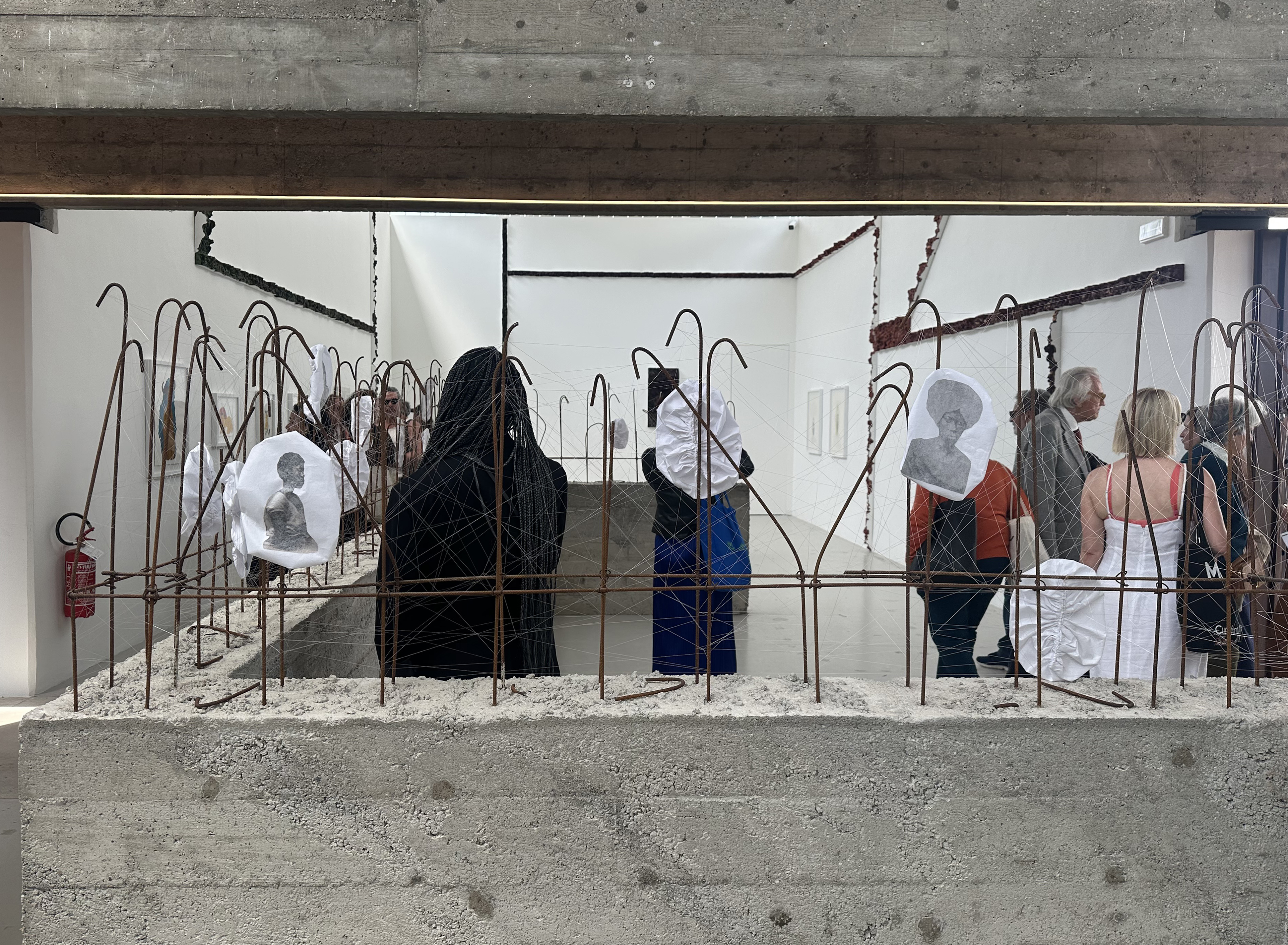
Rosana Paulino Comigo ninguém pode Padiglione Brasile
Monday, 11
today i'm leaving. last night, for the first time in days, i slept deeply and long. i have permission to stay in my room a few extra hours because my train leaves in the afternoon. officially, i should already be checking out. it is 10:30 in the morning.
i lie on the bed scrolling through facebook and instagram. everywhere there are group photos, smiling faces, glasses raised in celebration, beautiful exhibition views, crowds gathering in courtyards and pavilions. for a moment i even consider taking one last quick trip into Venice before leaving. there is a luggage room downstairs. technically, i still have time.
but i am packing slowly, and while folding my clothes i already feel tired again. don't think you are tired my yoga teacher used to say. i try to remember this sentence, though the body has its own truth. something similar i read in the subtitles of the video projected at the show of Natasha Tontey at Ateo Veneto: when the body refuses to follow the script.
the photos online make me unexpectedly sad. so many people seem to have shared this Biennale together, while i often felt alone inside it. my days almost took on the rhythm of ordinary workdays: taking the bus there in the morning, wandering through exhibitions for hours, then returning in the evening.
once i treated myself to a proper meal — starter, main course, a sweet Aperol Spritz, and an espresso afterwards. it cost as much as half the exhibition catalog, without even counting the tip.
and yet, the journey was absolutely worth it.
i have never experienced this atmosphere at a Venice Biennale before. there was an openness, a movement, a vitality that stays with me. Africa felt deeply present throughout many exhibitions and conversations. however, it was not Africa, it is the African Vibes. every time i spoke on the phone with Gambia, i missed my life there. everytime i watched a video from Westafrica i got homesick. what appeared here was not the daily reality of my life in Africa.
Venice has always carried, for me, a certain melancholy — a visible awareness of transience. the fading facades, the water touching everything. in Venice one feels that history itself is becoming porous.
this Biennale brings vitality into that atmosphere. movement. noise. encounters. the city seems less like a monument to the past and more like a living organism again.
and perhaps this is where i feel a difference between Europe and Africa. in Africa, impermanence is not hidden or mourned in the same way. things change, decay, vanish, and return again, and life continues around them with remarkable intensity. there is less illusion of eternity, and perhaps therefore less fear of its loss. the fear is there, of course, because human beings fear loss and death. but often there is also a stronger acceptance that life exists precisely because it passes. the happiness of being alive then dispels anxiety.
i still have a bit of waiting time left downstairs in the foyer, with comfortable sofas and a table where i can write. i actually forgot to take advantage of it — perhaps because i was on the fourth floor. for going into town, i didn't have the energy.
anyway, i've been thinking about sponsorship and fundraising. i'm wondering why i gave up on it and instead started managing with my own resources. i think it's partly because no one encourages me or tells me which doors might be worth knocking on, or what kind of qualifications i would need to spark interest. it feels to me that everyone around me is facing similar questions, and that most people need a push to take the next steps. many are struggling to realise their ideas and bring them to another level. maybe i'm also too easily satisfied, and in a way, i already have what i need. of course, i would love to have residents at the House of Culture Tintinto, and some have already expressed interest. but i sense that most would need an invitation that comes with financial support. and that feels overwhelming. still, i haven't given up hope.
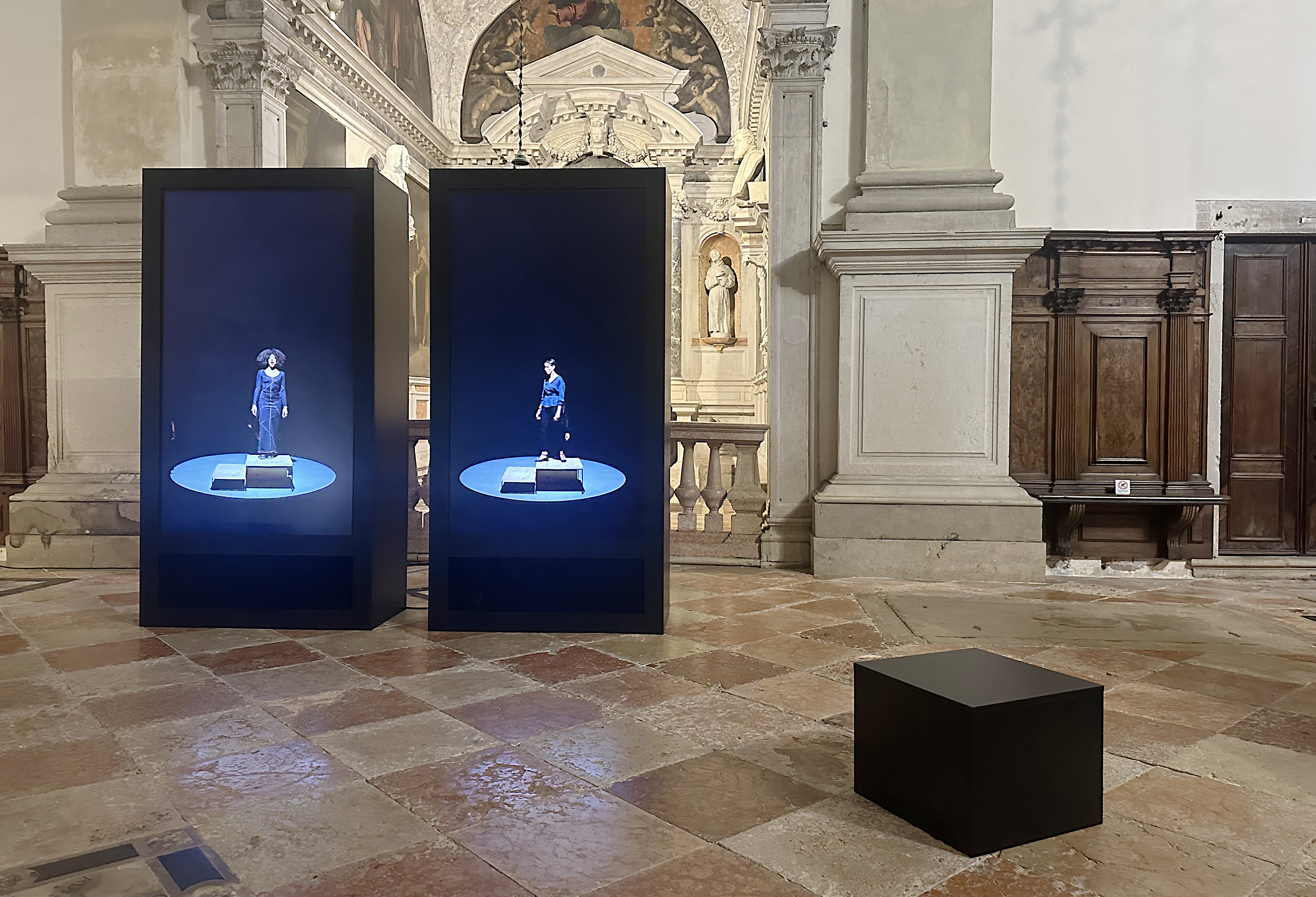
Gabrielle Goliath Elegy Chiesa di Sant'Antonin
finding the Cameroon Pavilion turned into quite an odyssey. the provided address had been Sestiere Dorsoduro, 3122. at San Zaccaria, i already took a vaporetto in the wrong direction and ended up at San Giorgio instead of the Accademia, where a large poster promoted an exhibition of Baselitz. i hesitated briefly, but in that very moment i saw the return boat arriving.
when i finally got off at Accademia, i saw a queue outside the building where Marina Abramović's work Transforming Energy is being shown. again, i hesitated, but told myself: the goal was the Cameroon Pavilion. in fact, ever since arriving in Venice, my mantra has been: you can't see everything. many years ago, i read Abramović's autobiography and was thrilled by it, but lately my interest has faded. so i walked past.
at said address, i found a hair salon where nobody knew anything about the pavilion. in the bar next door, i learned that it had moved, and that there was a QR code on the door that i could scan. an Instagram profile opened, listing the name of a foundation and an address: H10 Palazzo Canova, which i entered into my map to head forward and back to the Accademia stop.
i got off at San Silvestro and, after wandering through a series of dead-end corners, ended up at a hotel. i went inside and explained my mission. they told me that it was the wrong address. again. the correct one was apparently written on the invitation.
"i don't have an invitation," i said.
eighty people had been here yesterday, but today you are the first.
they kindly gave me the correct address, and when i left the hotel passing a row of gondolas, i noticed a poster for Sigmar Polke. since he was a professor at the time i was a student, i forced myself to go and see it. photographs on the preparation of the 1986 biennale were on display. the gallery owner approached and spoke to me. i answered in english, but he immediately declared that i spoke german. nobody had been that brazen before.
i was too tired to react to his bluntness, so i briefly explained my background in german, looked through the photographs, and read a quote stating that Polke had allowed himself great freedom with negatives. when i noticed a portrait of him, i initially thought it was Georg. in truth, i never met Sigmar (or at least i don't remember), only his students and his son.
i couldn't take the vaporetto because the Canale Grande was packed with boats and football fans — at least that was how it looked. so, i crossed the Rialto Bridge pushing through the crowd and kept walking straight ahead, as the hotel receptionist had advised. the streets were ovnerflowing with people.
eventually, i arrived at a petrol station in Cannareggio at the end of Calle Lunga Santa Caterina; i had missed the entrance to the Cameroon Pavilion.
the moment i entered, my first reaction was simply to complain. i was exhausted.
i collapsed into the video room and rested. the installation worked well with the crumbling walls of the space. beautiful sound. after the loop had ended, i moved into the other rooms, where i encountered Beya. we spoke briefly. somehow that made up for everything.
Saturday, 9
the three-day preview has come to an end. i largely allowed chance to guide my movements, as my sense of orientation remains not reliable. the friends i encountered and spent time with seemed to assume that i could navigate the labyrinthine structure with ease, as i had been already many times in Venice. however, i was sorry to inform them that i would disappoint them in this regard.
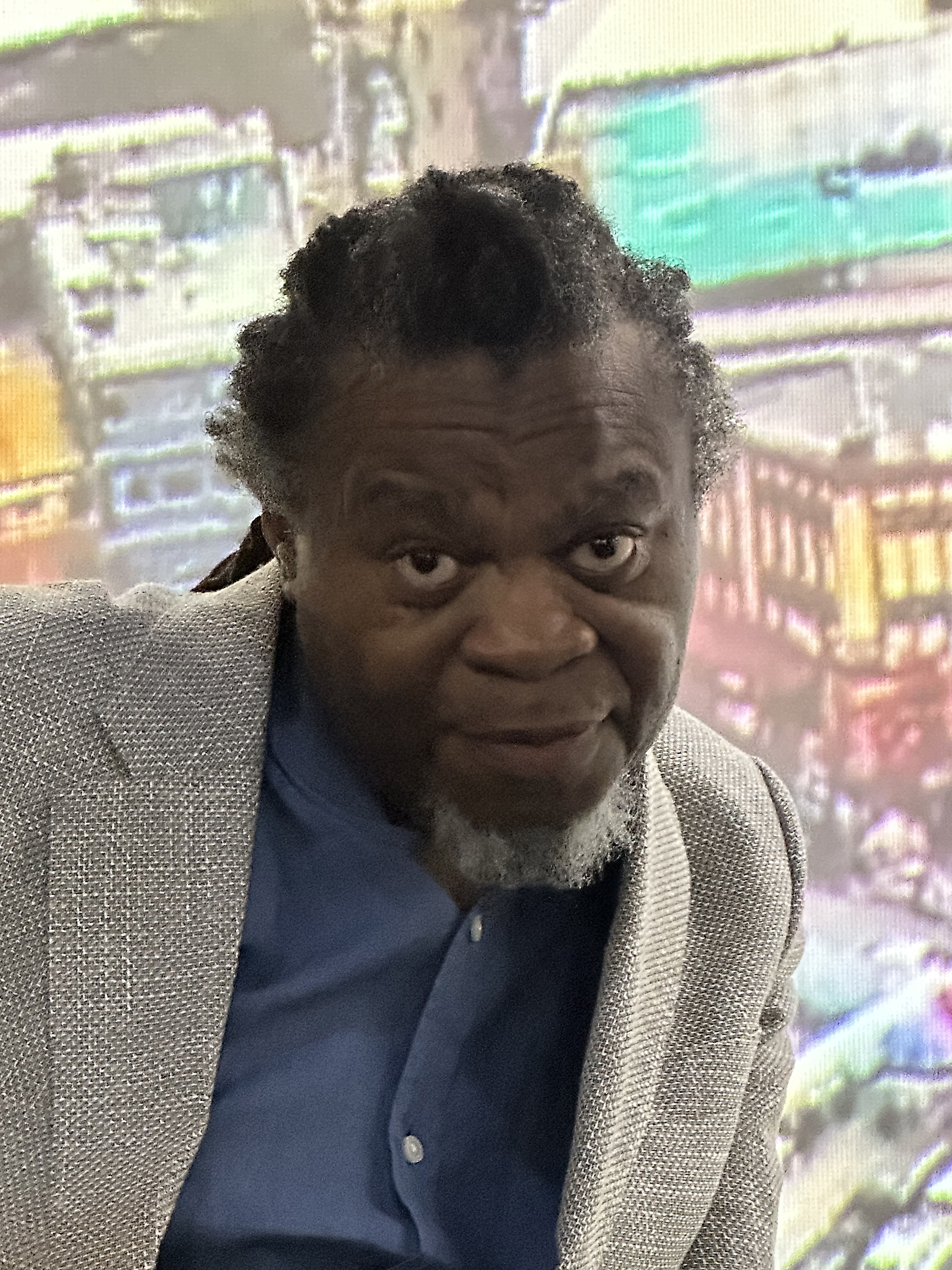
this logic of coincidences continued at the arsenale on wednesday when i was drawn to a round wall made of mud blocks. i went inside and looked for a place to sit and rest. suddenly, and completely unexpected for me, Yinka Shonibare rolled in on his wheelchair and spoke about the residency project of the Guest Artists Space Foundation. the residency initiative had been invited into the central exhibtion In Minor Keys by Koyo Kouoh. rather than presenting a single artwork, the project frames the residency itself as an artisitc and intellectual practice — a space for long-term research, exchange, ecology, and collabortation. during his speech Shonibare was keeping his eyes constantly on me, almost like he knew about my own project. so after his speech, i took a portrait of him that captures well the moment.
yesterday at the Giardini, i found myself hesitating between purchasing the substantial full catalogue and the abridged edition. since i travelled with only one suitcase this time, my luggage allowance leaves little room for excess weight. yet and of course the library at House of Culture Tintinto seemed reason enough to acquire the complete volume.
later, while passing the rally against genocide, another moment of indecision. i would have liked to join, but the ache in my back persuaded me to return to Marghera instead.
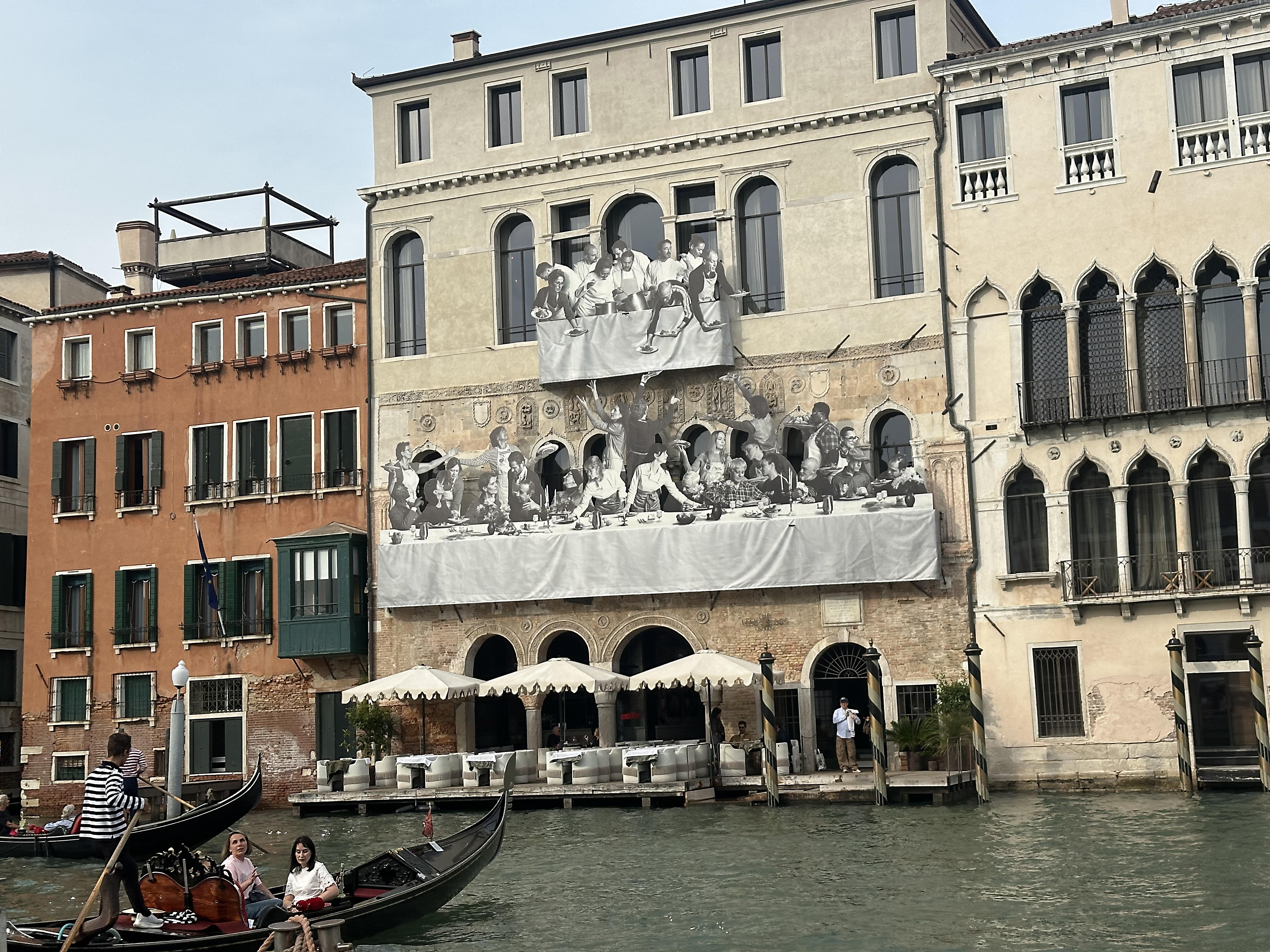
this time i took vaporetto number 1 instead of the faster 5.1. i managed to secure a seat by the window and spent the journey observing the facades along the canal while overhearing a conversation in english nearby. a woman from New York, who mentioned that she would be flying back there the following day while her companion continued on to Tokyo, was expressing frustration that several pavilions had been closed. after all, she had paid five hundred dollars for a VIP pass. The man she was speaking with, carrying a suitcase and speaking with a French accent, explained that he himself was returning to Paris. as we passed JR's work, I stopped to take a photograph. All three of them followed my gaze and did the same.
today i plan to visit several of the externally located pavilions and collateral exhibitions, including the Cameroon pavilion as well as Gabrielle Goliath's project Elegy, the presentation, which was cancelled at the Biennale, because of her tribute to the Palestinian poet Hibba Abu Nada, who was killed in Gaza. the miniister of ports, arts and culture requested changes, which Goliath refused to make. After legal disputes and public criticism south africa withdraw entirely from the biennale, leaving the pavilion closed. she decided to realise her project independently at the Chiesa di Sant'Antonin.
Friday, 8
i want to go to the Giardini, but my phone says "Slow Charger." so i have to wait.
for the last three days i've spent here in Venice, i've come home in the evenings with only a few percent battery left. on the flight to Marco Polo Airport via Casanblanca, my cable broke (i was charging via my laptop, and when i tried to unplug the cable, the plug stayed in, meaning one of my laptop's ports is now occupied). the first thing i had to do upon arrival was get a new cable. i'm staying in Marghera, which i really appreciate. i can escape the hustle and bustle in the evenings and prepare in peace in the mornings. the bus ride across the causeway to the island is pleasant and quick. from Piazzale Roma, i then continue using the vaporettos. the 7-day pass is very practical. i'm still enthusiastic about the city, but it seems increasingly hollowed out.
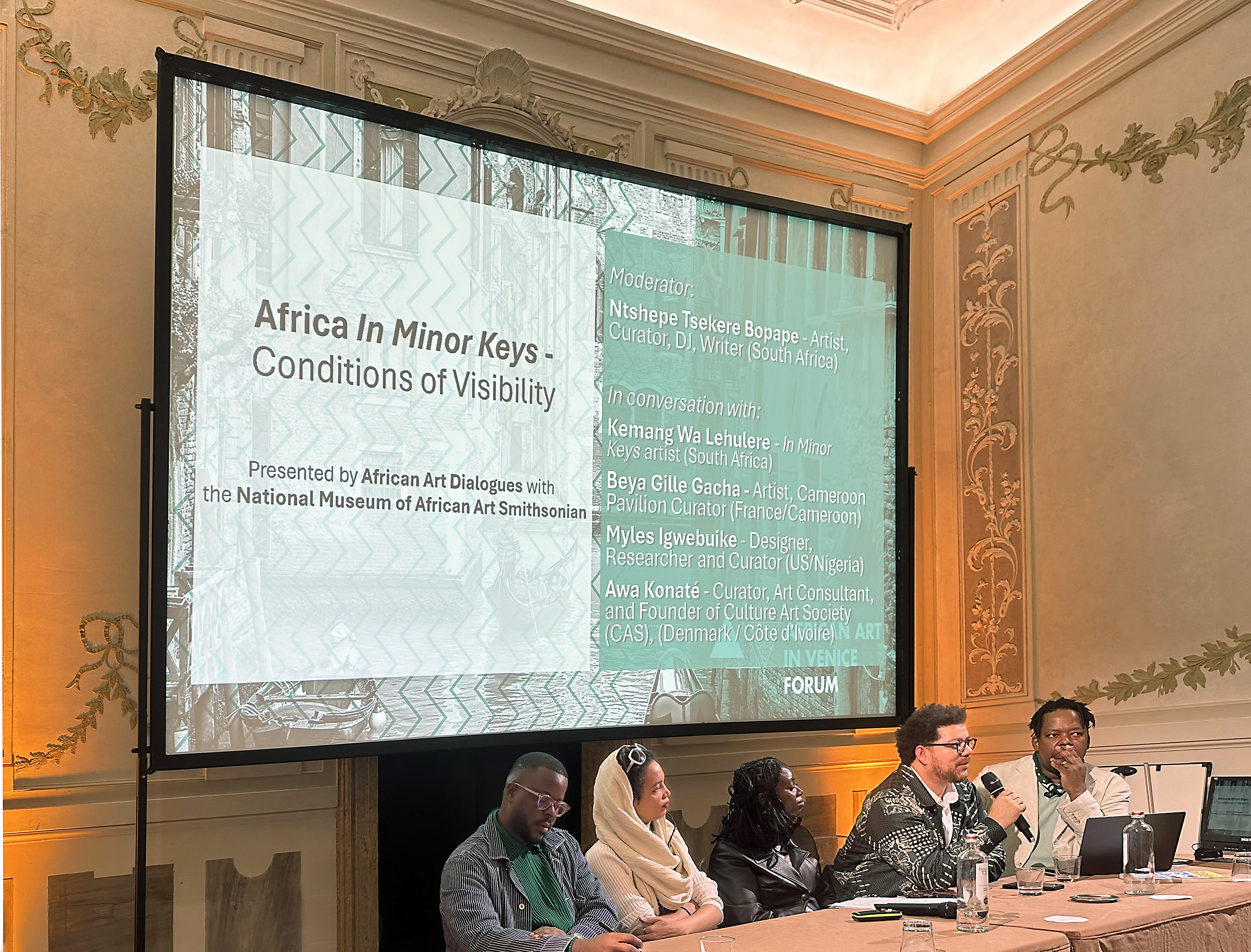
the panel discussion Conditions of Visibility at the Hotel Monaco on tuesday morning was a perfect introduction.
Saturday, 2
In Minor Keys: The 61st Biennale di Arte Venezia Opens Under Koyo Kouoh (1967-2025) Brendon and Suzette Bell-Roberts
Friday, 1
Art Space Work of the Month
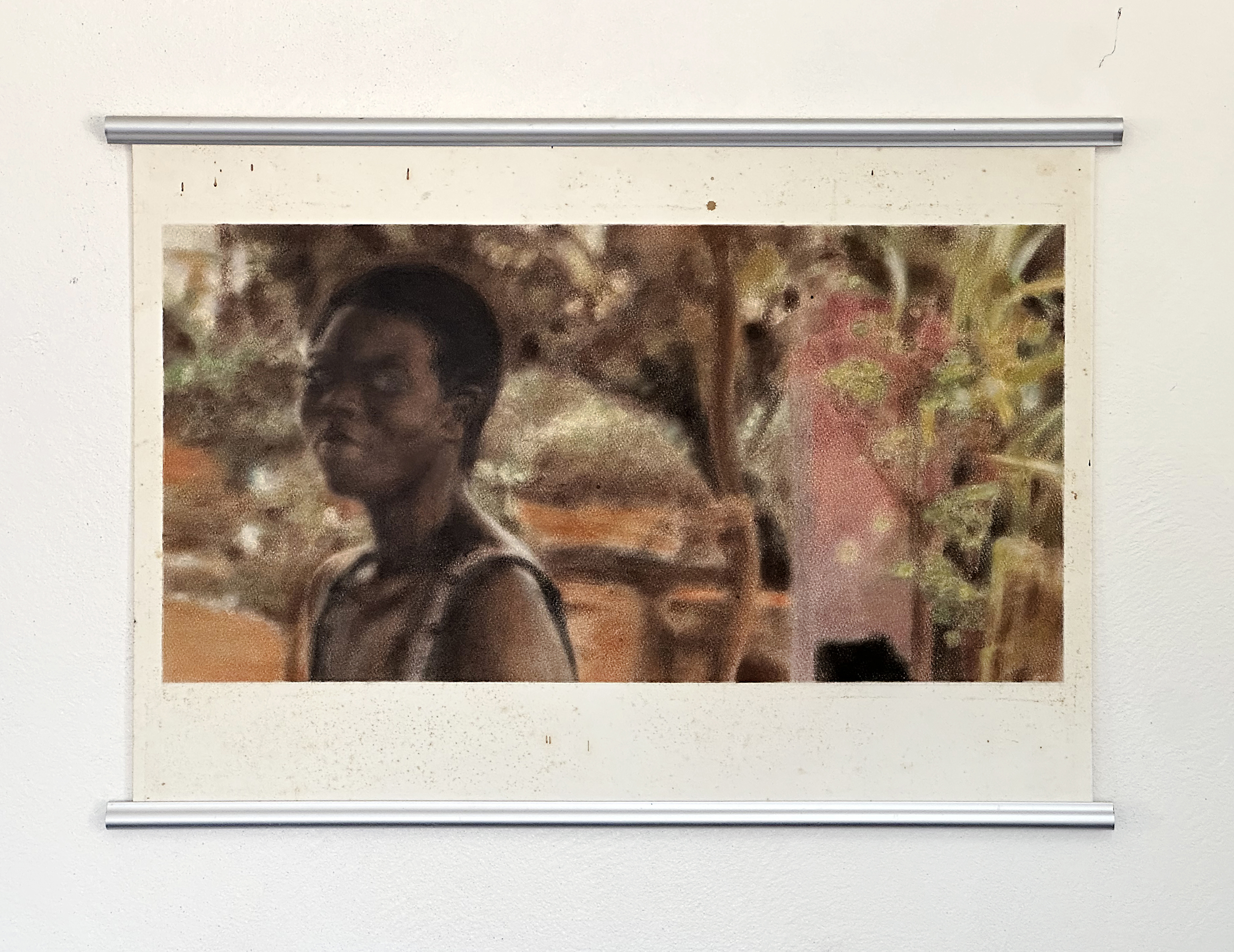
Christian Schaffner, Smile, part of Africa 83 series, 2003, pastel on paper, 60 x 40 cm