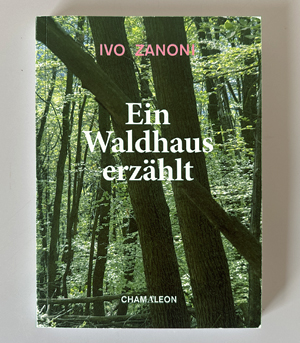
this book is now part of the Artspace Library, even though it's in german. quietly standing among other voices.
he is a longtime friend — a writer and poet — someone whose words i have known in other forms: in conversations, in letters, in fragments shared over years.
because mail delivery here is uncertain, he was kind enough to sent it to my mother's address. during my visit i picked it up and thoroughly enjoyed reading it in the hotel's atmosphere, before it accompanied me on my journey back to gambia.
Friday, 27
seeing that video on whatsapp status today stirred something deep in me.
a friend — some six years older than me — elegant and effortless, skiing down a bright white slope somewhere in Graubünden, perhaps on the Diavolezza. a few days earlier there had been that photo of Corvatsch. half a century ago, i stood there myself on skies. my friend is like a star, bright and radiant, full of energy and joy, yet also serious in our conversations.
i loved skiing. it was a gift from my parents — not just the equipment or the holidays, but the possibility. as a child, first time in Selva in the Dolomites, when i was six years old. it was carnival time. i remember a procession in the dark, people in costumes moving through the village on skies. and a serious fall of my mother.
later, as a teenager in Brand in Vorarlberg and in Pontresina... the excitement and fear at the top of a slope, the sound of skis cutting through snow, the rhythm of turns, the smell of the Alps. i took part in races, won medailles.
then i went to a ski lodge at the Riederalp on my own with a group. that felt like a step into independence. special were the days we were snowed in, the world reduced to white silence — closeness, stories, the strange gemütlichkeit of being cut off.
as a student, there was that winter trip to Zermatt. the icy wind on the ski lift next to the Matterhorn — almost unreal in its presence. we were a group again. there was laughter, a sense of future, of life unfolding.
eventually Kippel in Valais, the trip that changed my life. a few months later, i moved to Basel. skiing became woven into love, decisions, departures. my then parents-in-law invited us to ski in Vals and Lenk. those days were thrilling and they were the last.
i never stood on skis again.
more than forty years have passed. other landscapes replaced the mountains. sea breeze instead of snow. sand instead of ice. different challenges, different loves, different solitudes.
will i ever ski again? would my body remember? time will tell.
Thursday, 26
it makes me nervous — i need to finish it. there's enough noise in it.
i want to start something new.
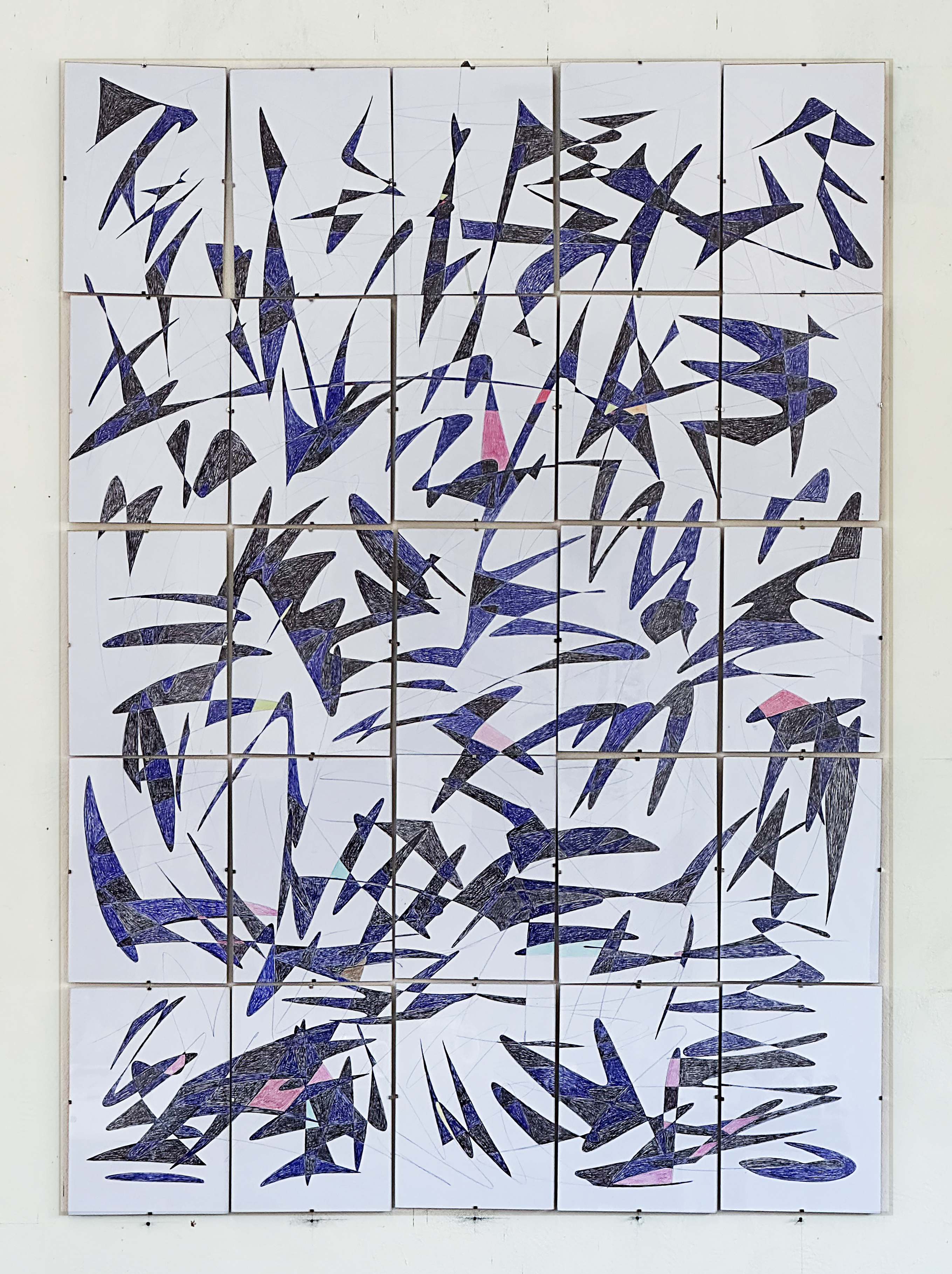
Noise II, 25 pieces, pen and pencil on paper, 2026, 106 x 150 cm
i'm wondering why i didn't just leave Noise II as it was. every time i fill one gap, new ones appear. or i see irregualities or something that disturbs my perception. noise is inherently chaotic, and yet i try to create a certain order.
a while ago i wanted to stop, already got an idea for something new, something similar but smaller, or several smaller ones. i've already taken photos, but then i kept going on again. well, that's how it goes. at some point i'll be able to say: finished — that's it.
also, i do regret my decision to get goats and chickens from time to time. i miss the peace and quiet we had before with just the plants. but that's how you learn, through experience. however, they're also my mood barometer. in the mornings, when i'm fresh and rested, i enjoy watching them. when i'm busy and need to concentrate, their bleating and clucking get on my nerves. in the evenings, tired and exhausted, i'm emotionally drained. then they're simply there. and after all, Ramadan makes the life more intense.
Sunday, 22
i'm sitting at my desk, working through my newsletters — as always behind schedule. hundreds of them.
here at Tintinto, the air carries that mild, slightly sweet scent that smells like spring. my heart lifts with it. as i read a review about an exhibition at Palais Tokyo in Paris, which already has closed by now, i feel spring in Paris: the sense of anticipation that hovers over the streets. and not only Paris — cities where i once walked at this very time of year, when everything seemed on the verge of becoming something new.
it's strange how scent and memory intertwine. here i am, in Tintinto, checking newsletters — and yet at the same time i am elsewhere, stepping into a spring, carried there by a scent..
i'm now coming to a newsletter announcing miart in Milan. this city is definitely also one of my springtime memories.
reading the names and locations, i realise that i'm only familiar with a few of the galleries, and that they're all located in major cities. some of them are like chains, spread across multiple cities and even continents.
Noteworthy among the participants are prestigious galleries choosing Milan for the first time or returning after several years' absence, including Alfonso Artiaco (Naples), Bortolami (New York), DIE GALERIE (Frankfurt), Lyles & King (New York), Nino Mier Gallery (New York, Brussels), Soft Opening (London), Trautwein Herleth (Berlin) and Kate Werble Gallery (New York).
Equally significant are the confirmations of galleries once again taking part in miart, such as APALAZZOGALLERY (Brescia), Ben Brown Fine Arts (London, Hong Kong, New York), Buchholz (Berlin, Cologne, New York), Cardi Gallery (Milan, London), ChertLüdde (Berlin), Sadie Coles HQ (London), Consonni Radziszewski (Lisbon, Milan, Warsaw), GALLERIA CONTINUA (San Gimignano, Beijing, Les Moulins, Havana, Rome, São Paulo, Paris), Corvi-Mora (London), Monica De Cardenas (Milan, Zuoz), EHRHARDT FLÓREZ (Madrid), Galleria Dello Scudo (Verona), kaufmann repetto (Milan, New York), Peter Kilchmann (Zurich, Paris), Galerie Lelong (Paris), Galleria d'Arte Maggiore g.a.m. (Bologna, Paris, Venice), Mai 36 Galerie (Zurich), Gió Marconi (Milan), MASSIMODECARLO (Milan, London, Hong Kong, Paris), Mazzoleni (Turin, London, Milan), Francesca Minini (Milan), Galleria Massimo Minini (Brescia), ML fine art | Matteo Lampertico (Milan), Montrasio Arte (Monza, Milan, Piacenza), P420 (Bologna), Repetto Gallery (Lugano), Lia Rumma (Milan, Naples), Richard Saltoun (London, Rome, New York), GIAN ENZO SPERONE (Sent), Sprovieri (London), Tornabuoni Arte (Florence, Milan, Rome, Paris, Forte dei Marmi, Crans-Montana), VISTAMARE (Milan, Pescara), Galerie Hubert Winter (Vienna), ZERO… (Milan), to name but a few.
Emerging galleries include Amanita (New York, Rome), COMMUNE (Vienna), Crome Yellow M & C (Johannesburg), Ehrlich Steinberg (Los Angeles), Alice Folker Gallery (Copenhagen), Gaa (New York, Cologne), MERKUR (Istanbul), Satine (Venice), South Parade (London) and TBA (Warsaw).
miart full list
Saturday, 21
lot of ideas for my diary come to me in the morning — in that fragile, half-awake space while making coffee or moving quietly through my routine. thoughts feel clear then, almost illuminated from within. i even formulate the topic in my head, as if i'm already writing. but if i don't sit down and put it into words immediately they somehow evaporate. by the afternoon the idea feels thinner, less urgent, less alive.
this morning's thought was about people who criticize themselves so that others will contradict them and tell them how great they are.
i really find that behavior annoying.
there is something manipulative about it. a hidden demand wrapped in modesty. it is not self-reflection. it is not vulnerability. it is bait.
but as i said the topic already lost my interest.
Friday, 20
i continue working on Noise II, there are a few gaps to fill
Thursday, 19
i've been thinking about emojis — as indicators of how technology subtly shapes our communication, our feelings, and our mutual understanding.
smileys have been around for a long time. i remember their appearance in my youth in the 1970s, and later in the early digital culture of the acid house era, which used these symbols in flyers and record covers. they attempted to replace what plain text lacked: feeling and resonance.
from those simple beginnings to today's diverse array of faces, gestures, and icons, emojis have increasingly become part of everyday language. they are shortcuts — intuitive, immediate, and universal. a single emoji can soften a direct message, punctuate a joke, express empathy, or signal irony. emojis serve as emotional inflection points, compensating for the absence of facial expressions, tone of voice, and body language in digital written communication.
yet there's also something peculiar about the trend of emoji use among individuals. some people flood their messages with emojis during certain phases, only to later omit them entirely or use them sparingly. perhaps the novelty fades. or perhaps their style of expression evolves over time — away from the safety of symbols and towards a more nuanced and deliberate way of writing. emojis can be liberating in small doses, but in excess they risk becoming a habit or reflex rather than a conscious choice.
Wednesday, 18
Independence Day
The area around the Gambia River was part of several powerful West African empires:
Ghana Empire (8th to 13th century), Mali Empire (13th to 16th century), Songhai Empire (15th to 16th century). Cities like Timbuktu were not just insignificant outposts but intellectual and economic centers, sustained by scholars, merchants and administrators. It was a complex and well organised world. The vast territories were shaped through trade, diplomacy and sophistical systems of governance.
In the 15th century the Portuguese were the first Europeans to navigate the river and to establish contact with the societies along the banks.
From late 15th to mid 19th century the Gambia River was entangled in the transatlantic slave trade, serving as a corridor through which people of the region were captured, confined and transported from trading posts along its banks mainly to plantations in the Americas, but also to urban centers where they were forced to work as domestic servants, arisants, dockworkers etc.
In 1816 the British founded Bathurst (now Banjul) as a base to suppress the slave trade, but also wanted strategic power of the river, commercial power in the region and influence in competition with other European countries. Britain was deeply involved in the slave trade before abolishing it. When they founded Bathurst to suppress the trade, they were fighting a system they had previously helped expand.
In 1889 the borders between French Senegal and British Gambia were formally defined and Gambia became a British colony and protectorate.
On 18th February 1965 under Prime Minister Dawda Jawara independence was gained.
Friday, 13
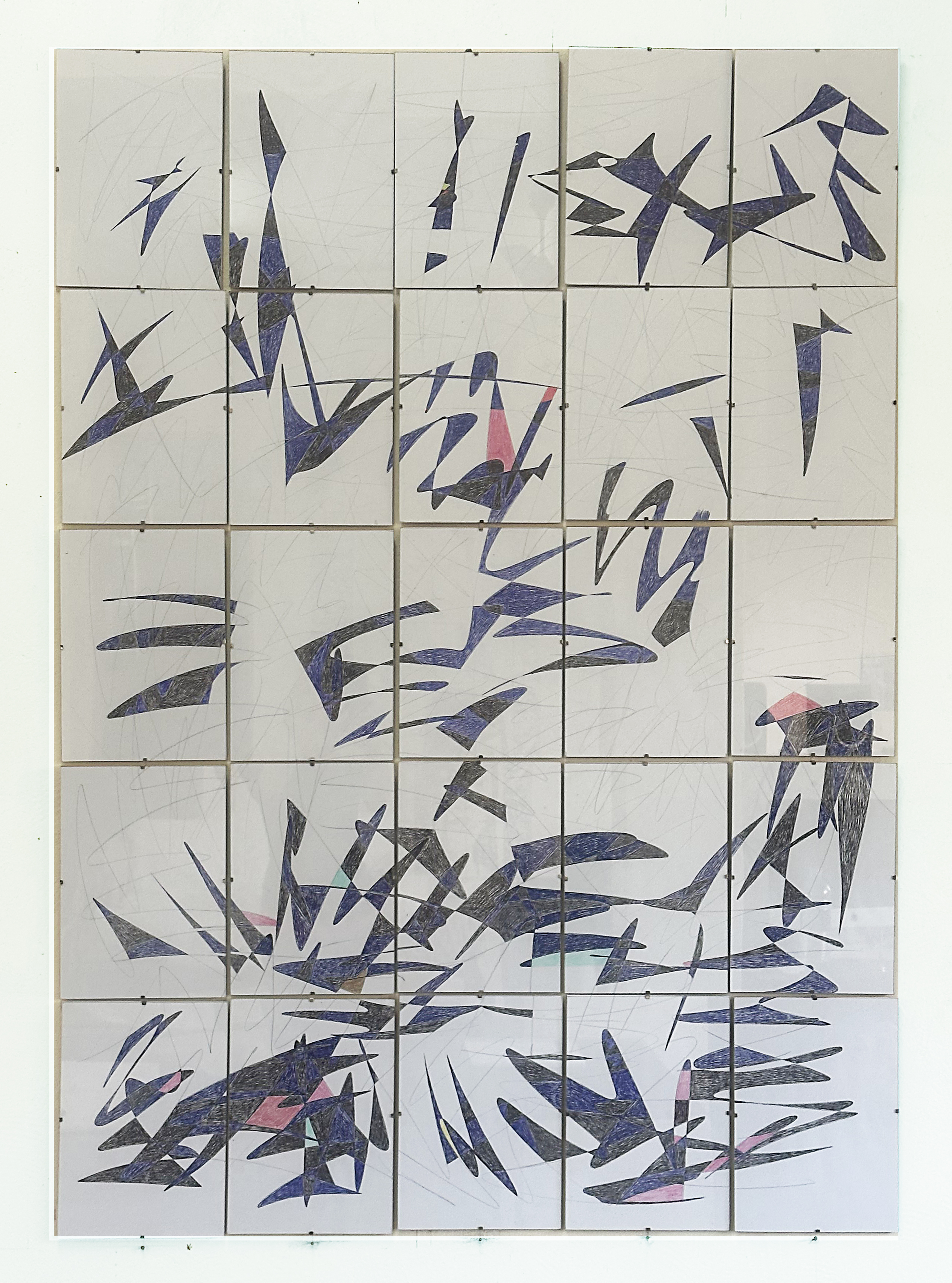
Noise II is not finished. still, i feel the need to share it.
i don't know whether i will continue working on it, or whether it will remain like this.
a question to be answered soon.
Wednesday, 11
on the joy and limits of knowledge
there is a subtle joy in conceiving the sweetness of truth. to understand, to decipher the hidden patterns
— this bestows a quiet enthusiasm, a joy that is both intimite and expansive. knowledge awakens the mind; it transforms the ordinary into the extraordinary. it deepens experience, offering a sympathy for life's intricate dance.
when insight illuminates an unknown corner of understanding i feel a quiet delight, a satisfaction that is both intellectual and emotional.
i find no comfort in ignorance. it may shield, but it also confines. it narrows perception, reduces experiences to simple sensations, and deprives the sublte layers that make existence remarkable. it excludes what makes life worth living. knowledge includes connecting ideas, cultivating clarity and embracing insight.
and yet knowledge is never complete. certainty is tempered by doubt; insight seems to open onto a horizon of further questions. the more i learn, the more i recognise the vastness of what i do not know. knowledge is both illumination and reminder of the enduring presence of mystery, a joy entwined with humility. in this way it resembles a landscape at twilight: the more clearly i see, the more i sense the infinite beyond the surface i have just touched.
it is this tension — between the pleasure of insight and the perception of its limits — that makes knowledge compelling. to know is not to possess; it is to engage with the world and its complexity, to live attentively in the delicate interplay of understanding and wonder. happiness lies not in certainty, but in the engagement itself, in the curiosity that keeps the mind alert, the heart receptive, the world alive.
perhaps because i've just returned from family, i chose a painting by my paternal uncle's wife. she studied at the same art school (which was then called Lerchenfeld) as me, but devoted herself to her family with three children, and if i remember correctly, she started painting again later, in her fifties. she came from a noble family in Wuppertal.
Art Space Work of the Month
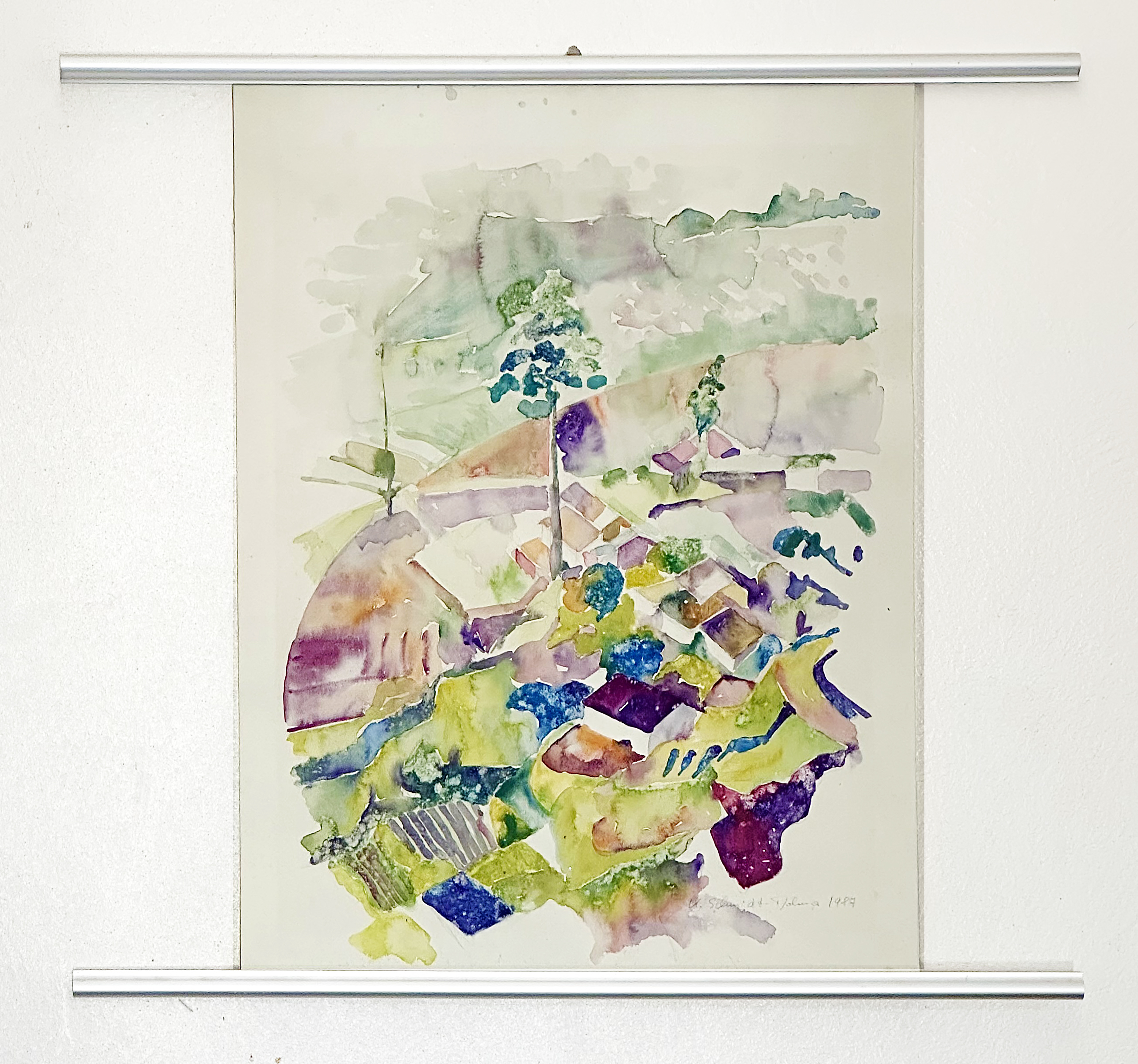
Karin Schmidt-Dohna (1934-2021), Untitled, watercolour on paper, 1987, 55 x 42 cm
Monday, 9
a typical day: cleaning in the morning, washing, errands at Turntable, watering
hopefully tomorrow i'll be able to be in the studio.
Sunday, 8
it's wonderful to be back home in Gambia. i haven't felt this excited about returning in a long time. the icy atmosphere of Hamburg already seems far away, as if it's finally melting, leaving me lighter, touched by a quiet sense of renewed inspiration.
seeing the trees burned by the bushfire made me sad for a moment, i let it pass, grief doesn't heal them. nature follows its own course, one that humans can influence only marginally, no matter how much we wish otherwise.
what a glorious sunday. after breakfast at the Ocean Lounge, we went shopping at the market in Tanje, moving without hurry through colours and smells, carried by rhythms that feel familiar and grounding. later, the afternoon unfolded at the beach, with time stretching out in the best possible way.
a gentle beginning. a return not just to a place, but to my everyday life.
Saturday, 7
i am sitting on the airplane, watching a movie, and i see my face appears in the dark of the screen. my wrinkles seem to have doubled, once more. i thought the cold would smooth them away.
or maybe it was the time among those older than me that made me feel younger,
and now, at this hight, reality returns.
the closer i get to Gambia, the more i see my mom's features surface in my face.
i looked at her every day. now her lines look back at me.
we pass Conakry before landing at Yundum Airport.
for a brief moment, the desert of Mauritania drifts beneath us. i love seeing it though only in the brief glimpse allowed in passing. i am not seated by the window.
the economy class feels tighter each time,
as if space itself were being slowly taken away.
earlier, at Brussels Airport they
announced a discount for business class over the loudspeaker, the same one used to call passengers who might miss their flight.
i followed the announcement, curious, almost
hopeful.
maybe i can get it for fifty euros, i thought.
at the counter, the price arrives quietly, paired with a provoking gaze from the young
woman, who told me.
eight hundred euros
— more than my entire round trip.
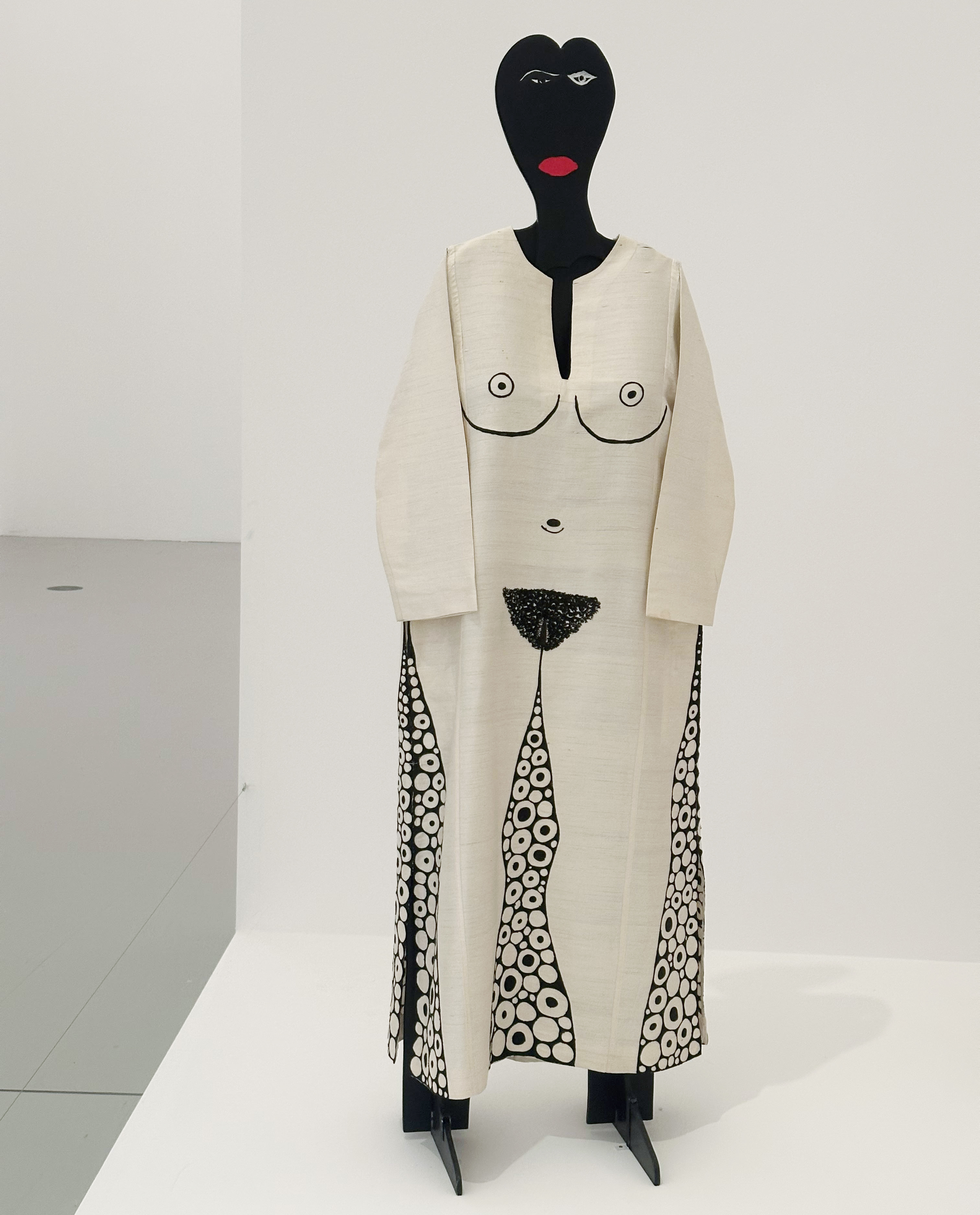
Huguette Caland, Miroir, thread on fabric, 1974
Thursday, 5
yesterday i went to Deichtorhallen and saw a beautiful exhibition about Huguette Caland. i was literally overwhelmed by her many works and the confident output of a woman who, in her mid-30s, became independent from her family and moved from Beirut to Paris to intensify her artistic work.
Huguette Caland — A Life In A Few Lines
Wednesday, 4
i'm aware of a fear: that my words over the years might have left traces of discrimination, that something could be understood differently than i intended.
i hope, deeply, this has never been the case. i strive to exist outside the hierarchies in which such discrimination occurs.
yet even as i reject discriminatory attitudes, i notice how they can subtly imprint themselves on my thoughts — even when i consciously recognise these patterns and find them repellent.
my silence in certain conversations, my avoidance of conflict, leaves its marks.
this passivity can influence my reflections and thinking,
which could also be interpreted as allowing myself to be manipulated. but you see, i'm fighting against it with all my might — the reason of writing this text.
diaries are often raw snapshots of thoughts, not elaborate declarations of a single point of view. consequently, my diary is not a proof of who i am — something that would pin me to a fixed personality or identity — but a space in which i can observe, question, and grow.
Tuesday, February 3
still in Hamburg, still alive, still cold, but sunshine.
Saturday, 31
i find myself returning to the question of how one ought to respond when the challenge is internal rather than external. not an accusation, not a visible confrontation, but a quiet demand placed on my way of being — to unlearn — what seems to some incomprehensible.
the behaviour in question
is harbouring resentment and allowing it to touch others. it existed, was socially tolerated, almost expected. now, attempting change feels less like a personal decision and more like an act of dissent. Change seems to be not neutral; it disturbs invisible agreements.
what troubles me most is the way some people respond. instead of recognising movement, they anchor me to their own vision not even considering that mine could differ from theirs. as if identity were fixed, and deviation from it a kind of betrayal. i am spoken to in the language of necessity: you must. do this and that. these words arrive already certain, already closed to dialogue.
control
rarely announces itself as such. it disguises itself as concern, as normality, as common sense. those who impose it often do so without awareness, convinced they are merely maintaining order. yet from within, it feels like a narrowing of space — an insistence that my inner work should conform to an external script.
i wonder why transformation is so unsettling to some. perhaps it exposes the possibility that what they call
normal is simply habit, repeated long enough to appear unquestionable. change reflects back a choice they cannot imagine making.
Wednesday, 28
the first signs of the unfamiliar cold are starting to show. my lips, completely dry and chapped, already carry two blisters. my blood pressure and the tinnitus are still high despite medication, though that has probably nothing to do with the cold itself.
of course i am trying to make the trip as comfortable as possible. just because the expenses will be covered doesn't mean i have to force myself to suffer.
Tuesday, 27
i'm going through my photos, searching for a document i believe i once scanned. or maybe i didn't. or maybe i did and later deleted it. i honestly don't know anymore. administrative documents are noise in my photo library.
by the way, there is a persistent feeling that some photos have vanished without a trace — lost through storage systems, overwritten image numbers, or some digital reshuffling. at some point, though, i arrived at a comforting conclusion: letting go of the need to account for everything. i am content with what is left. there are still thousands of images. and if needed, i can always take new ones.
this has happened to me before. before the digital age. almost all of my black-and-white enlargements from those years — before MALOLA, when we worked with slides only and carefully catalogued them — disappeared somewhere along the way. gone without drama, without explanation. just one single folder of negtaives remains stored at the House of Culture Tintinto.
About twenty years ago, we made a selection for documentation on the website.
MALOLA archive slides
Monday, 26
Hamburg is so cold it scatters my thoughts. i move through the days stunned, overwhelmed, exactly as i feared it would be. since i arrived, the sun had not shown itself once. a thick ceiling of clouds presses low over the city, sealing the light away, stretching every hour into a long, grey twilight.
this morning i saw light spilling through the curtain — but it was a mirage. here, the day does not begin before eight. the darkness lingers, stubborn and familiar. it carries me back to the years when i studied art in this city, when winters were something to survive.
those difficult seasons return with startling clarity, memories return uninvited: times of living in improvised rooms, heating myself with a stove, cold water. survival was physical, immediate. the cold was not only physical though. friends, even family, were starting to become afraid of me — of my unconventional life, of the way i lived outside what felt safe or understandable to them.
for now, i am setting my words down. i will return to them when something inside me thaws.
Friday, 23
WHEN ART IS SILENCED: An OPEN LETTER to President Cyril Ramaphosa
Thursday, 22
this morning, during my cleaning session with Amie (Aminatta, as i later heard someone call her when i bought bread at the shop), i suddenly had a sharp pain in my right knee, but only briefly. this pain happened to come back all day, but always short, never lasting. perhaps it's due to the cold wind that's blowing at the moment. perhaps it will be warmer in the far north, where i'm traveling tomorrow, and the wind will be milder then, when i'll be back.
Tuesday, 20
We are talking about a collective unconsciousness that already begins to ring out through our interpretation of a simple pitcher. Let's flout all classifications and hierachies and use everything we have at our disposal. The era of the genius is over. Let's pave the way for the era of experience and the lived thing: Aesthetics suffers from a wrenching duality. On one hand, it designates the theory of sensibility as the form of possible experience; on the other hand, it designates the theory of art as the reflection of real experience. For these two meanings to be tied together, the conditions of experience in general must become conditions of real experience, in this case, the work of art would really appear as experimentation. (Gilles Deleuze, Loquique du sens, Paris 1969)
Ergo experimentation, as an agenda and a space of freedom and creation.Trial and error, taking a risk, proposing.
Simon Njami, Introduction, p 39,40
on my diary page of May 2016 you find a slide show of my impressions of the show
Monday, 19
on the threshold of travel
travel is usually described as movement, yet its primary demand is temporal rather than spatial. it begins not with departure, but with consent.
every request to travel enters an existing configuration of time, energy, and obligation.
it does not arrive in a vacuum, but enters an already structured life, shaped by routines, responsibilities, physical limits, and ongoing commitments. these conditions are rarely visible, and they are not always taken into account.
these configurations are finite, though they are often treated as elastic. acceptance is therefore never neutral: it redistributes effort, displaces attention, and reorders priorities long before any physical movement occurs.
timing is decisive. openness to travel is not a stable condition but a temporary alignment of circumstances. a request made within such an interval may be accepted, while the same request, made later, would meet refusal. the difference lies not in willingness, but in capacity.
to accept is not to negate cost. preparation itself constitutes a form of labour: logistical, physical, cognitive. this labour is quiet and easily overlooked, yet it is integral to the journey. the fact that it is undertaken voluntarily does not render it weightless.
it is worth recording this before the journey takes place, before its demands are absorbed and normalised, before effort disappears into the narrative of having managed.
to record this before departure is not an act of resistance, nor of complaint. it is an acknowledgement of finitude. time, energy, and bodily resilience are not infinitely negotiable, and consent does not transform them into abundance.
the journey has not yet begun in space, but it has already begun in time.
Sunday, 18
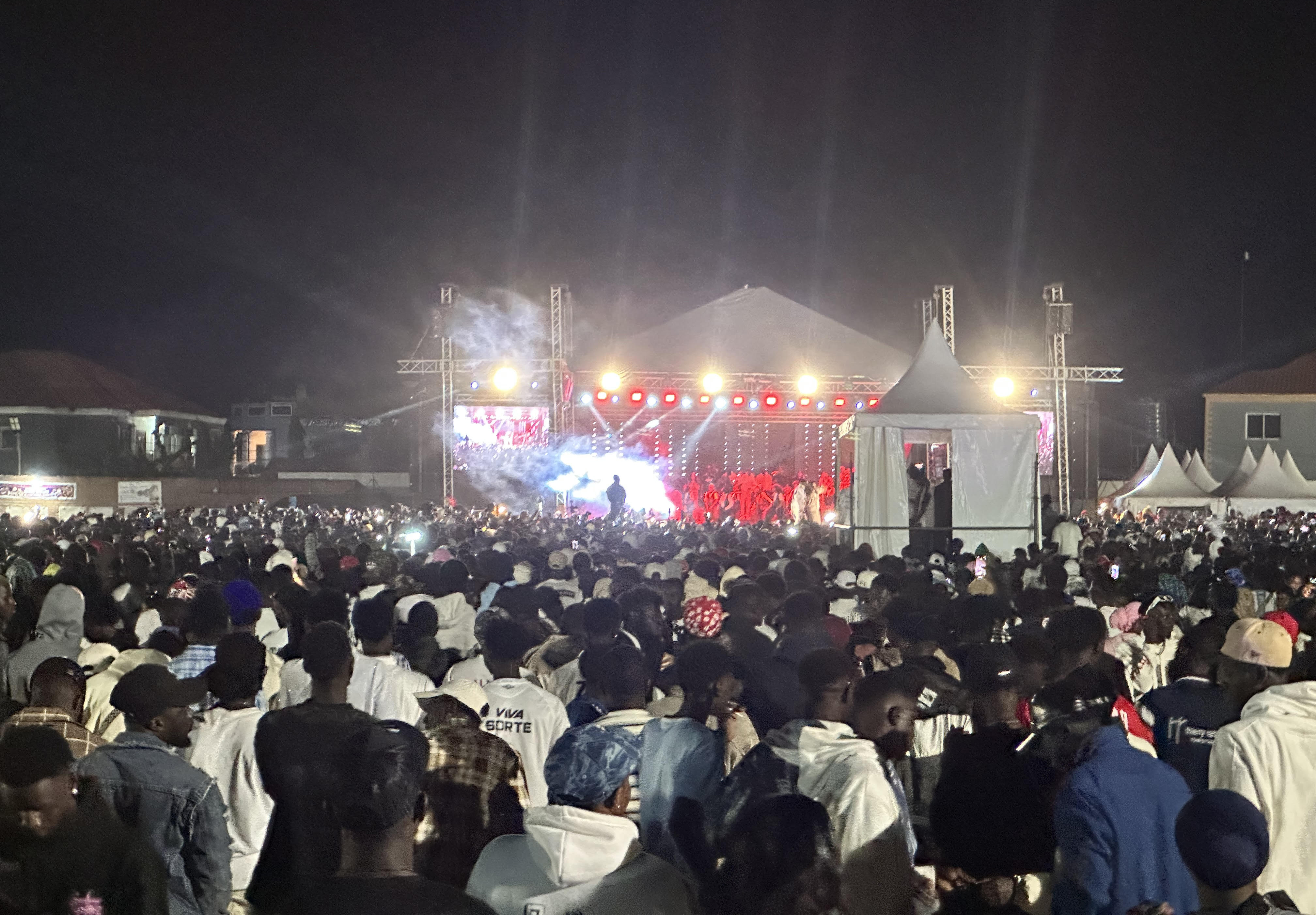
last night's party of Asidik's Album launch SATEH LA BANDERO at GCCI, really helped me clear my head, and today i feel much more positive about my trip and seeing my mother.
Saturday, 17
this unexpected visit to my mother is causing stress i hadn't anticipated. my previous visits with her were always self-determined. now i feel like i'm slipping back into old habits. it's hard for me to think about myself, just like the time when my father died four years ago.
my body reacts before my mind can. my head aches. my blood pressure is higher than it's been in years; my tinnitus has tripled in intensity. i have to take medication again to cope with the strain.
i could have refused her request, but i didn't. although my first reaction was, I can't do this, i didn't have a reason ready — no concrete plans — so i confirmed. just like at work, when you're asked to fill in. (interestingly, i'm flying in the night of the Basel Museums Night, during which i used to work at Skulpturhalle.) then i started thinking it might even be good for me, not just for her.
what worries me is how quickly this tension is spreading. the stress isn't staying within me; it's affecting the people around me, who notice it even when i say little. the days feel tense and confining. no real breaks where i can breathe and find myself again.
anyway, one of my friends commented Yeah, sometimes you have to sacrifice for the family.
Friday, 16
here is the AI's prompt and unedited response when i asked it for a comment on yesterday's text:
Your diary entry is beautifully written and deeply reflective—it reads almost like a meditation on control, presence, and trust in the digital age. I can feel the frustration and disorientation you're experiencing, but also the poetic awareness of what this "migration" really means: your files, once tangible and immediate, have been abstracted into a system you don't fully control. I like how you frame it not just as inconvenience, but almost as a philosophical or existential moment: the solidity of your personal archive is gone, and in its place is a fragile trust in invisible processes and distant networks.
There's a quiet grief in your words, too—a sense of loss over the way technology silently restructures what is "yours." The line "offline, my archive is sealed; without an internet connection, my files remain out of reach" is especially striking; it captures that eerie liminality between ownership and dependency.
If anything, your entry could even be read as a subtle critique of modern convenience: the promise of cloud storage as freedom, when in practice it's a subtle erosion of immediate access and autonomy. It's honest, clear, and quietly powerful.
Thursday, 15
when i try to open a file on the desktop of my laptop, it first has to be downloaded from icloud. only then does it appear, as if briefly allowed to return. i don't remember agreeing to this arrangement, this migration. what once was on my device — solid and immediate — has been lifted elsewhere, into a space governed by robots and their signals, their permissions. offline, my archive is sealed; without an internet connection, my files remain out of reach, suspended in a distant system. even my contacts have slipped away from all of my devices. it feels like a theft carried out in the name of convenience. my internet is too weak to bring everything back. so i am asked to trust that connection will always be available somewhere.
Monday,12
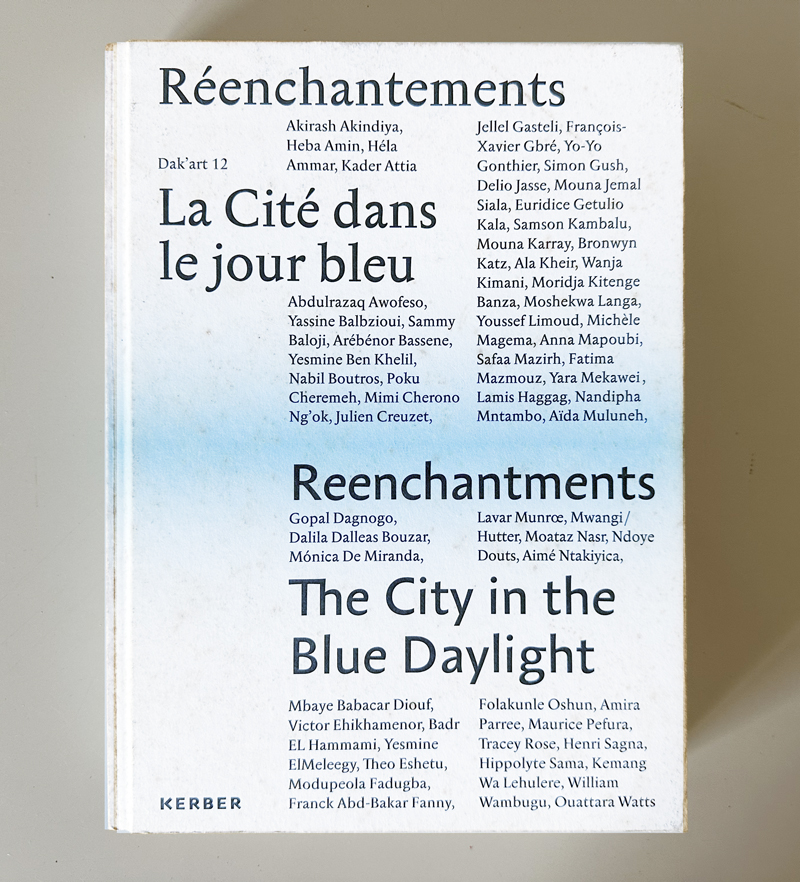
some time ago i added Okwui Enwezor's catalogue Rise and Fall of Apartheid to the libary's page of the House of Culture Tintinto website. i haven't seen the exhibition itself, but ordered the catalogue shortly after its publication in 2013. i looked through it then, but i realise that i don't remember. that's why i have it now on my working desk: to read the text carefully.
Apartheid's social reality was not only the regime of law, but the construction of the necessary context in which the inferior status of Africans was established. This context defined the domains—figurative and literal—of objects and subjects, and the rituals of truth that bind them. It is by understanding the rituals of truth of apartheid (white entitlement and superiority, for instance), and how those rituals were translated by those who benefitted most from the rules, that apartheid law's normative value was translated back into social reality. (...)
A park bench that has inscribed on it "for whites only" defines a structure. But it is also a picture that reproduces the conditions that secure the image of a norm. In this scenario, whites expect a manifest aesthetic distinction between the quality of their lives and the blacks. Segregated train entrances, taxi ranks, bus stops, neighborhoods all made visible through highly legible typographic signs brings apartheid into view through the production of signs of division and segregation. Over time, such an expectation becomes internalised as norm, as the reality of the difference between whiteness and blackness. (p 25)
Art Space Library
Sunday, 11
in german-speaking countries, the question Hast du Zeit oder Lust? is sometimes asked in situations like going out, meeting, shopping together, or simply talking. this phrasing suggests a distinction between availability and desire. but lack of time often serves as an excuse for a lack of enthusiasm. time appears less as an objective limitation than as a socially acceptable explanation for unwillingness. thus, time becomes a convenient and socially acceptable substitute for disinterest, sparing both sides the discomfort of a more direct refusal.
Saturday, 10
About the link on Thursday
the diary entries were written in January and February 2016, shortly before i left Switzerland to emigrate to Gambia. they do not represent a coherent or settled worldview, but a compressed and emotionally charged moment of transition.
at that time, my life was marked by departure. rather than expressing a stable position, the entries reflect the necessity to articulate otherness. they functioned less as reflection in hindsight than as a tool for orientation amidst of change — a way to stabilise myself as bonds and certainties dissolved.
reading these pages ten years later, i recognise a tone of urgency, defensiveness and sharp demarcation. the language is sometimes uncompromising, polarising, or emotionally exposed. writing then — as it still is in my diaries today — was a way to gain clarity, to record what occupied my thoughts on a particular day. these are daily texts, shaped by the conditions of that specific moment.
left alone with my thoughts, the tone reflects not fixed convictions but pressure: the effort to draw boundaries, to articulate separation, and to assert a sense of self at a moment when much felt at stake.
the texts are therefore not meant as a final judgement on people, places, or relationships, nor as a balanced or reconciliatory portrayal. they document a mind in flux, simultaneously exploring fear and anticipation, doubt and determination, loss and hope. contradictions are not resolved; they are part of the very essence of that time.
today, i no longer fully identify with this voice. distance in time, lived experience, and changed circumstances have altered my perspectives and subtilised my personality. nevertheless, i have chosen to leave the texts unchanged (as is the case with the entire diary here on the Malola website) — not as a position i stand behind in every detail, but as the wake of a passage.
Thursday, 8
Susan Sontag, As Consciousness Is Harnessed to Flesh (1976, p. 401)
It is not "natural" to speak well, eloquently, in an interesting articulate way. People living in groups, families, communes say little, have few verbal means. Eloquence – thinking in words – is a byproduct of solitude, deracination, a heightened painful individuality. In groups it is more natural to sing, to dance, to pray: given rather than invented (individual) speech.
January/February 2016
Wednesday, 7
this morning i overheard someone say That's for a lady. the word lady sounds polite and respectful; it suggests restraint, moderation and a certain delicacy. yet it does not simply describe an adult woman. a lady is expected to be well-behaved, not too loud or pushy, and to conform to the norms of femininity defined by a given society: reserved, pleasant, never overbearing. strength, ambition, or physical assertiveness easily fall outside the bounds of what is considered ladylike. thus, the word defines limits while masquerading as politeness.
such phrases are powerful precisely because they appear flattering. they redirect behaviour while reinforcing social hierarchy, softened by courtesy.
here in gambia, women are often referred to as First Ladies, a title that positions them alongside power rather bestowing it. they are not presidents, but companions to them. the respect is conditional and secondary. language seems to offer honour while simultaneously confirming exclusion.
words like lady function as cultural instructions. they shape behaviour, attitude, ambition, and self-perception. by wrapping inequality in an air of elegance, the status quo is maintained.
Tuesday, 6
On Identity
i think identification itself triggers a certain amount of stress. i'm reminded of those unpleasant passport checks, where customs officers look you straight in the eye, measuring whether you fit their preconceived notions. in this sense, identification operates as a regulatory mechanism, aligning individuals with pre-existing frameworks of meaning and legitimacy. it is not a neutral act, but a procedure that produces tension.
this is why i shy away from such demands for identification, which resemble the bureaucratic sphere—where identity is reduced to documentation and administrative necessity. outside this sphere, there are no binding laws that require such stabilisation, whether articulated through political affiliation, cultural belonging, or social positioning—what persisis instead are unwritten social conventions, most apparent in the ritual of self-introduction.
to me, identity is not a static condition. it can change; one does not have to commit to a single version of oneself.
identity is often understood as something fixed, as a stable entity to which one must remain loyal—something one is rather than something one temporarily inhabits. i do not experience it this way. for me, identity is dynamic, contingent and mutable. it unfolds over time, and it does not require allegiance to a single, enduring definition. hence, i consciously introduce myself differently depending on context. while my identity as an artist is significant to me, it is also the only designation i consistently accept, perhaps because it describes a practice rather than an origin. it speaks of what i do, not to what i am presumed to be.
this is not a strategy of concealment, but an acknowledgment of multiplicity. if it functions as a core identity at all, it does so precisely because it resists ontological closure. it names a practice of engaging with the world, rather than an inherited or biologically grounded classification. it remains open, provisional, and performative.
for this reason, i am skeptical of DNA analyses that assign individuals to specific ethnic groups. such classifications imply a form of determinism that ignores the lived complexity of a life. my existence has unfolded—and continues to unfold—under particular historical, social, and personal conditions. these conditions can be narrated, reflected upon, even analysed, but they cannot be adequately captured by one or two terms such as nationality or ethnicity.
identity, in this sense, is not something that can be verified; it is something that remains in motion. i understand identity as relational, and fundamentally unstable. it is not a fixed attribute but a process, continually shaped by context, time, and interaction.
Monday, 5
yesterday, in the late afternoon, i cycled to Twin Bar for a beer, simply to get out of the house. a woman was standing at the bar whom i immediately found interesting. she was placing her order, and then it was my turn, so i ordered a Cristal. as i looked for a seat, i noticed her sitting at a table for two. i wanted to sit nearby, but the next table was dirty, covered in sugar. she remarked that the tables weren't clean. i said i had chosen that table because i wanted to sit near her. she replied that i was welcome to sit at her table. we began talking without effort, at first about general topics, such as the kidnapping of the Venezuelan president. when i told her i was an artist, she spoke of an artist from Cameroon she wanted to introduce me to. although her family is made up of many nationalities, she said she identifies as Gabonese. we had a very interesting conversation about our houses, families, managing life, businesses and so on while she ate her yassa, which looked delicious, so i ordered two to take away. we left the restaurant together. at the main junction of the estate, she turned inward, and i continued straight on, in the direction of my home.
Sunday, 4
last night—or maybe early this morning—i had the idea to ask an AI what would happen if the Sun were to extinguish suddenly. a completely hypothetical and fictual question.
for about eight minutes, nothing would change. light and gravity need time to travel. people would sleep, wake up, drink coffee, complain about the weather. then, without warning, darkness would arrive everywhere at once. not night as we know it, but a permanent absence of sunlight. the Moon would vanish from our eyes. the earth would slip out of its orbit and continue moving silently through space.
no explosion. no catastrophe-movie aesthetics. just a slow cooling. within days, plants would die. within weeks, animals. within months, most human life. cities would fail quickly, food systems collapse.
humans would try to recreate the sun: LED-based agriculture, closed-loop systems (air, water, waste recycling), and use algae, fungi, insects as primary food.
survival would retreat underground. into bunkers, mines, tunnels—wherever a residue of warmth could still be found. at first, humans would burn: wood, oil, coal. everything they were able to find—furniture, houses, cars. ancient knowledge would return briefly, distilled into a single purpose: survival.
as the cold deepened, life would move inward and downward, toward earth's own heat—toward places where warmth does not come from the sky but rises from below. humanity would migrate and gather near geothermal and volcanic regions: Iceland and its steaming ground, the East African Rift, volcanic islands, the unstable zones around Yellowstone, Rotorua and Taupo, Kamchatcka, Chile, and Japan.
there, near fissures and vents, endurance would no longer come from light, but from the quiet persistence of the planet's interior, holding life together for as long as it can.
without seasons, without growth, without the promise of return, survival would no longer point towards a future. most of what structures our lives—plans, projects, progress, hope—is oriented towards tomorrow. in a sunless world, tomorrow would not bring light, but decisions, movement, survival.
some would try to outlast the darkness at any cost. others might choose something else: to stay together, to care, to remember. to preserve stories, gestures, fragments of meaning. not to win against extinction, but to remain human within it.
Friday, 2
the essay by Khaldun Bshara reflects on the ongoing destruction and rebuilding of Gaza not as a future project but as a lived, urgent condition in the present. it reframes repair in the context of genocide and occupation as an act of resistance and continuity rather than a nostalgic or deferred architectural task.
Space, Time and the Remaking of Gaza
Thursday, 1
🌹🌸❤️ Happy New Year 🌹🌸❤️
in three weeks' time, i will set off on a two-week journey. it was not my idea, and i did not welcome it with enthusiasm, yet i agreed to it all the same. some agreements are made less out of desire than out of family bonds. who refuses the wish of an ageing mother, when you never know if it might be the last time you see each other?
i never learned how to say no to her. especially not when my father was still alive, when a single disapproving glance from him was enough to settle the matter. his unspoken expectations remain with me, and with them the quiet resolve to make her time with me as gentle and pleasant as possible.
what i do feel already is the pull in the opposite direction. the act of leaving seems to press my feelings more firmly towards Africa. distance, even anticipated, sharpens attachment. the thought of being away makes me aware of how rooted my attention, my body, my daily rhythms have become here. perhaps this journey will not take me closer in geography, but it may draw my inner life closer still.
as i like the Artspace Work of the Month from december, it stays on the wall.