Wednesday, 31
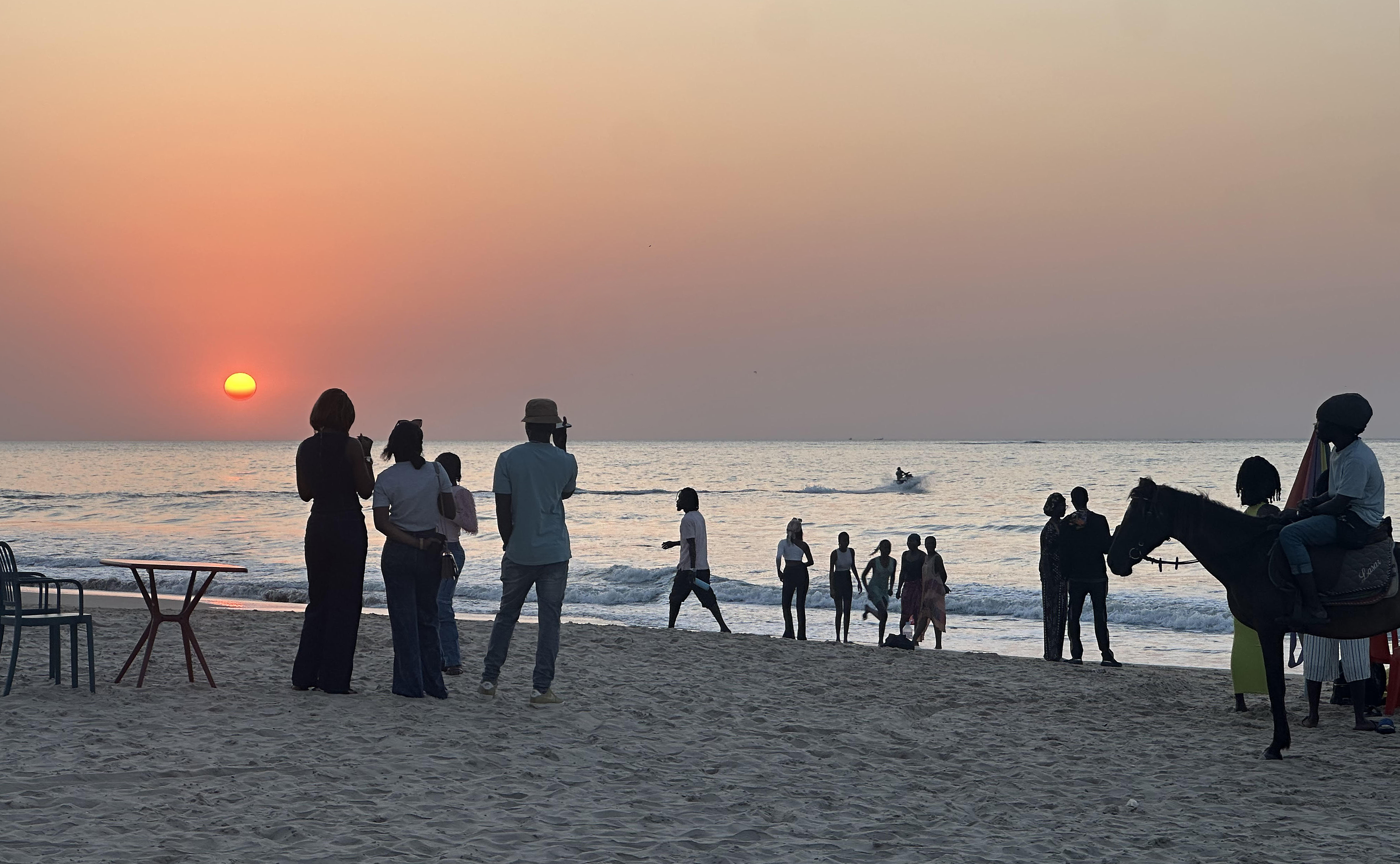
a snapshot with which i am closing the year.
it was taken the evening before yesterday, when i met Anne at Solomon's. like me she grew up in northern germany but has been living in the gambia for several decades now. here, she gave birth to her two daughters and built remarkable businesses across several hotels, which she still runs successfully today.
in this spirit i wish everyone a happy new year.
Tuesday, 30
regarding yesterday's text, there is something i want to add. maybe it is a step backwards to yesterday's thoughts, but it feels important to mention.
whenever i was working on something to enlighten me, part of me was already trying to hold me back. not by force, not by argument. often unintentional. often unnoticed. interruptions arrived before the direction had fully taken shape. over time, this blockage became internal, and the initial impulse faded. distractions made me lose sight of the goal. i chose hesitation over clarity before anyone else did. and finally, i chose the safer path—at the expense of my own creativity.
i now realise that those who brought their projects to fruition—artists, writers, musicians, film directors—had to protect themselves from this mechanism. they did not become indifferent. they became precise. at certain moments, they closed the door behind them. not out of superiority, but out of necessity. progress demanded it.
the moments of momentum i did have, i did not value enough. i allowed myself to be distracted instead of remaining focused.
this is not about assigning blame. it is about pattern. some people become calmer when you slow down. more present when you doubt yourself. closeness arises from restraint. warmth from interruption. the price is rarely mentioned, but it accumulates.
what i once read as consideration, i now recognise as adaptation. delaying my own needs to soothe what hadn't been examined. mistaking self-reduction for humility.
when certain topics from the past were difficult rather than entertaining, they were quietly discouraged. this is where writing becomes necessary. it allows continuity where interruption is expected. it makes possible to move forward without permission, to hold a line even when circumstances would prefer dispersion. writing resists blockage. it preserves direction. in this sense, writing is a place where i refuse to make myself smaller in order to remain bearable.
Monday, 29
there is a phenomenon i have come to recognise.
it is the way some people, without conscious malice, seem to relax when you stumble. they become warmer when you slow down, quieter when you doubt yourself, more present when you stop following your own vision.
they do not rush towards your failure; they wait for it. your strength unsettles something unresolved within them. their warmth arrives only after your fragility, their attention only after your setback, their closeness only after you fall. i remember how, in my youth, understatement was common, almost a social requirement. i supect it existed precisely to win the favours of others.
i see the roots of this dynamic early, in places shaped more by comparison than care. families where a child shines and another lags. schools where ease and struggle are measured. social systems where achievement is a scoreboard rather than a process. when one person moves with ease while another falters, the imbalance leaves a trace. unnoticed, it does not vanish—it transforms and quietly hardens into hostility.
this hostility is rarely named. it rarely reveals itself. it disguises itself as concern, realism, or grounding. support comes late—or never. encouragement feels hollow, performative, misaligned with its timing.
i am not afraid of failure. i take risks, knowing some will fail, knowing that failure is part of movement and learning. what unsettles me is something else: when my mistakes become comforting to others. when they are watched, weighed, or quietly savoured. then it is no longer about growth or process—it becomes about position. in its most extreme form, alignment shifts. conversations happen elsewhere. judgements quietly synchronise. in the worst cases, several people begin to move against you and start bullying you.
the message is silent but exact:
you are easier to bear when you are weaker. when you give in and follow their mindset.
however, when you interrupt yourself, delay your momentum, or display struggle first as proof of humility, you are not humble. you are adapting to someone else's unresolved wound. you become them and start begging for their understanding.
we are not responsible for soothing another person's inadequacy with our own diminishment. we should not temper our strength so others can feel unquestioned at our expense. i refuse to make myself smaller so others can feel stable. i refuse to interrupt my own movement to make space for their unspoken resentment. strength is not arrogance, and clarity is not cruelty.
showing compassion does not mean demeaning oneself.
if someone is unsettled by another person's momentum, that unease belongs to them. it has to be spoken, examined, and carried by its owner. i will not negotiate my direction to accommodate what has not been named.
i am not the kind of person who feels superior because someone else struggles, nor inferior because someone else succeeds. i do not measure myself through another's relief. i move forward on my own terms—without apology or asking permission to remain whole.
Sunday, 28
this morning, on my way back from Kings Bakery, where i had my morning coffee, i saw a new supermarket on Senegambia New Road and stopped to see what they had. inside, though, they told me that it wasn't open yet. the official opening wasn't until 5 pm. around 6 pm, as i was thinking about going for a short walk, i remembered it. now i even had a specific destination! outside the store, there was a huge buffet set up with all sorts of delicious treats. i did a little shopping first and found, among other things, olive oil for a great price, before helping myself to the buffet. Wonderful!
Saturday, 27
Artist Alvarro Barrigton We Need Artists to Be Vulnerable
Friday, 26
a day dealing with my hangover
Thursday, 25
when there is no reaction
we don't know
whether we gave too much
or not enough
no word that tells us
we were seen
for some gratitude is narrow
as if it was never required
as if there was no need
to give anything back
not even a word
xxxxxxxxxxxxxx
xxxxxxxxxx
xxxxxx
at Christmas, giving is everywhere. it is expected, repeated, ritualised.
giving is often treated as a moral good in itself. yet the ethical quality of giving does not lie in the act alone, but in the relations it creates or distorts.
money complicates this more than anything else.
when someone has significantly more money than another, a financial gift may appear generous, but it may also be effortless. in such cases, the question arises:
is gratitude required when what is given does not constitute a sacrifice?
from a philosophical perspective, gratitude is not owed for abundance distributing itself. if giving does not affect the giver, if it leaves their position unchanged, then demanding gratitude risks turning generosity into a form of symbolic domination. the giver appears benevolent; the receiver is placed in a position of obligation.
thinkers from Aristotle to contemporary ethicists have insisted that justice is relational. it concerns proportionality, recognition, and balance—not numerical equality, but ethical symmetry. when wealth differences are extreme, symmetry is already broken before any gift is offered.
in such contexts, money can function less as a gift and more as a corrective—or even as compensation. compensation does not require gratitude; it requires fairness. we do not thank someone for sharing what should not have been withheld in the first place.
this does not mean that financial giving is meaningless. but its ethical weight depends on whether it acknowledges or conceals inequality. if money is given in a way that reinforces hierarchy I give because I can then gratitude becomes part of the mechanism that stabilises injustice.
the situation changes when money is given with awareness of asymmetry. when it is offered without expectation of thanks, recognition, or moral elevation. in that case, refusing gratitude may itself be the most just response. silence, here, is not ingratitude but resistance to a false moral debt.
this logic does not extend to all forms of giving.
care, time, attention, emotional labour—these are always finite, regardless of social position. when they are given, they always cost something. to receive them without acknowledgment is not neutrality but erasure.
this is where confusion often arises. money, when abundant, can circulate without gratitude. Presence cannot.
justice, then, requires differentiation. it asks us to know what we are receiving, from whom, and at what cost. it asks us not to universalise gratitude, but to place it where recognition is due.
perhaps the deepest injustice occurs when these categories are collapsed—when money is thanked excessively, while care passes unnoticed. when material gifts receive words, and human effort receives none.
at Christmas gifts are wrapped, exchanged, and acknowledged. yet the human effort that makes these exchanges meaningful—the planning, the thought, the attention, the emotional labour—often remains invisible, unnamed, and unthanked while material gifts are counted and praised.
Wednesday, 24
merry christmas to the reader and your loved ones
Tuesday,23
i came across Your View Matter, a virtual reality work by Olafur Eliasson, which revolves around perception, movement, and the act of seeing. each visitor moves through the work differently, leaving behind a singular trace that becomes part of an archive. it treats experience as something fragile and specific, not repeatable.
the title without the plural -s or the one used for the verb in the third person singular seems to correspond more to spoken language than to written authority, i.e., linguistic plurality.
Your View Matter
Monday, 22
jealousy has never brought me closer to anyone. if it is used as a rope to pull me in, i feel not desired but handled. it is often mistaken for intimacy, yet what grows from comparison and fear cannot be a meeting of equals. i prefer presence over provocation, clarity over tension, and closeness that arises without tests or traps. when someone tries to make me jealous to secure my closeness, i step back.
Sunday, 21
last time at the gym, a woman asked me again—as i am asked repeatedly—why we are not married. it was not an aggressive question, more a matter-of-fact curiosity, as if marriage were a missing step that required an explanation.
for us, marriage was never an option we hardly ever talked about. it simply didn't fit our lives.
marriage is commonly understood as a private decision. in practice, it operates as a public form. it translates relationships into categories that can be registered, evaluated, and controlled. especially when age and origin do not align with local expectations, the absence of marriage becomes visible. its absence is read as a deficit, as hesitation, as refusal. through marriage, relationships become administratively recordable, individuals can be categorised, and they are more readily accepted and integrated into society.
in contexts shaped by unequal mobility, marriage often functions as a gate rather than a promise. it regulates who may stay, who must leave, who belongs, and under what conditions. love may be present, but it is not required. what is required is form.
i have witnessed marriage operating in this register: not as culmination, but as interruption of expulsion. in my case, marriage did not seal intimacy—as i personally believed—but mainly suspended deportation. the personal disappeared into procedure. marriage reassures by transforming contingency into permanence, but permanence is a legal fiction, not an existential condition. lives continue to change, diverge, exhaust themselves. the form remains while the content shifts.
this does not make marriage fraudulent. on the contrary, it reveals its true competence. marriage excels at stabilising uncertainty for the state, not at guaranteeing coherence for lives. its success is measurable in documents, not in duration or depth.
at the House of culture Tintinto i imagined a space without productivity—a park where works of art would sooner or later find their place, a place of peace, a zone of contemplation. a place that primarily needs maintenance, rather than where yield plays a role. it gradually transformed into something different. the shift was logical. it followed the same political rationality: value must justify itself through output. i was unable to maintain my own vision of a zone limited to perception, in favour of agriculture, which is significant for Gambia.
marriage belongs to this same economy of justification. it converts lived complexity into acceptable structure. but i will not give in on this case. refusing marriage, then, is not necessarily a refusal of commitment. it is a refusal to misrepresent reality. to decline a form that no longer corresponds to lived conditions is an act of accuracy, not rebellion.
some relationships persist without guarantees, without protection, without narrative closure. they are not unfinished; they are simply unconverted.
in that sense, the absence of marriage is not a lack. it is a cultural position—quiet, unspectacular, and precise.
Friday, 19
here is the link to my recently updated Instagram work. clicking on the photos shows it in its originial format. the captions below the photo block correspond to the information on instagram (date of publication, location and caption). the photo number is visible in the browser's address bar.
Thursday, 18
every afternoon the dogs look at me questiongly. sometimes they dance with joy, dreaming of going out. it's been a long time since we went for walks together, since the story with the little goat. but just yesterday i found two tiny kids grazing peacefully right in front of our gate. i chased them away and watched them run, already imagining how the dogs would run after them; even the mother was around. i opened the gate carefully preventing the dogs from getting out. i'm so sorry. i miss our walks very much, too.
-------------
from Europe, my life in Africa is sometimes described as endurance.
this admiration feels misplaced. i do not live a heroic life.
what i experience is not sacrifice but relation: with people and animals, with plants, materials, and time. not struggle, but adjustment. nothing exceptional, nothing to overcome.
i gather what is already there—found materials, fragments, traces, paths. scattered elements brought together without forcing them into a single form.
incompleteness is a way of staying open; process matters more than outcome.
no authorial gestures, no claim to control. shared attention over mastery.
meaning appears through proximity.
the figure of the hero or martyr feels distant to me. no legitimacy through suffering.
art becomes a shared thinking, a space to pause and look together.
Wednesday, 17
i declared it again a few days ago, very clearly this time: the House of Culture Tintinto, and the life we are leading, is made from what we both brought with us and from what we continue to bring. it is a shared responsibility. what each of us gives becomes visible in the result, which is a mix of visions and ideas, personal aesthetics, expectations, backgrounds and quiet hopes. nothing here arrived fully formed. the weight is not carried by one of us more heavily; rather what each of us puts in becomes part of the whole and reflects the blended result that slowly takes shape.
Sunday, 14
i've been feeling a bit down these past few days. even though i had just written my artist statement with deep conviction, doubts crept in—about the value of what i do. unsettling, how quickly certainty could give way to insecurity.
my age was getting to me; the wrinkles on my face began to look like scars, as if time had etched its own harsh commentary. my mind—and indeed my whole body—no longer functions as effortlessly as it once did. small lapses and moments of fatigue seemed to confirm my fears, feeding a quiet anxiety about decline and relevance.
yet, after sitting with these thoughts, i've managed to pull myself together again.
Friday, 12
we had a vistor who praised our work, yet later complained that there was no butter or jam for breakfast. i had served lentils, a boiled egg and salad. that, too, is how people are.
Thursday, 11
my artist statement on the website of House of Culture Tintinto
Wednesday, 10
as i read Glissant's Poetics of Relation, moving through his reflections on Errantry, i think about Reemah. searching for her lyrics, i found most of them on Jah Lyrics and and two on reggaetranslate.com, where Wandererz caught my attention. the juxtaposition is illuminating.
Reemah's wanderers drift through religious, cultural, ideological structures that present themselves as sources of grounding, yet in practice reinforce confusion and dependency. a confusion produced by systems that still echo colonial logic. she describes inherited epistemic loops that displace rationality and foreground repetition over openness.
Glissant's errantry however, represents a form of rooted movement that transforms wandering into relational knowledge. it does not seek a terminus but enacts a relational orientation towards the heterogenous, the rhizomatic, and the non-on-totalisable—expansive, reflective and consciously rational. he describes errantry as a relation to the world that accepts opacity, multiplicity and non-belonging as forms of knowledge.
in this sense, Reemah's wandering can be read as a diagnostic depiction of the conditions that Glissant theorises. her wanderers exemplify errancy untransformed: movement constrained by dogma—wandering without relation. Glissant provides the conceptual framework to understand how such wandering might be transformed into errantry.
both Reemah and Glissant are concerned with the same phenomenological field: the human condition under the legacies of structural dislocation, cultural uprooting, and inherited epistemic constraint. Reemah documents the experiential symptoms of this condition, while Glissant delineates the possibility of a theoretical and ethical pathway by which wandering becomes errantry, and disorientation can be transposed into relational knowledge. together, they constitute complementary analyses of wandering: one descriptive, the other prescriptive, converging on the same field of inquiry and offering distinct but illuminating perspectives on movement, relation, and the navigation of postcolonial dislocation.
Tuesday, 9
last night we went to Motherland again, and had the chance to see Reemah perform live. she was incredible—full of energy, soul and a presence that is both calm and commanding. she doesn't just sing; she transmits messages—about upliftment, resistance, identity, love. it felt like connection, inspiration, healing. as if she were giving me advice on how to cope with my own life. without theatrics, she filled the space through intention alone. the DJ she brought, who supported her at times on the microphone was tremendous too—groovy beats that never let you stop dancing.
today i looked her up. coming from St. Croix in the U.S. Virgin Islands and known for Conscious Reggae, she combines traditional reggae with meaningful lyrics: love of self and humanity, spiritual awareness, social messages.
songs from her debut album Check Your Words (2012) and from Breaking News (2018) have a reputation for sincerity, and hearing her live made this unmistakable. her delivery was candid but never heavy; she brought depth with an empathic ease. she created connection without forcing it. everyone seemed to understand the significance of what they were hearing.
i left the party feeling alive, thoughtful, and inspired. i'm grateful we went.
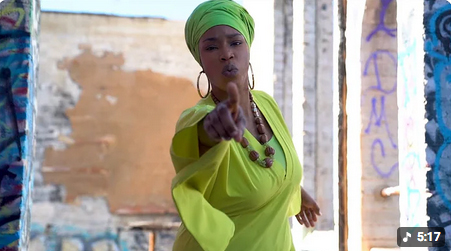
Reemah — Don't Want Nothing (youtube)
Monday, 8
the past and the unsaid
there is a strange belief that what is left unmentioned dissolves. as if events were made of sound, and by withholding a word we could withdraw their existence. do not name it, people say, and it will fade.
but what shouldn't be named does not lose its power—it simpy relocates. it moves from consciousness into the unconscious, where it continues its work: shaping desires, generating fears, guiding choices that feel free but are not.
to not look back is not liberation; it is a displacement.
and yet, by choosing not to look back, we define ourselves against the past, and thus remain intimately bound to it. the negation becomes a thread that still ties us to what we hope to escape.
to speak is not to revive pain—it is to give shape to what already exists.
silence does not erase; it only rearranges. it becomes a form of speech: a language of absence, dense with meaning.
and so, when someone says, "Let's not mention it," they imagine they are closing the chapter. but the unspoken becomes a kind of phantom.
we do not bury the past by avoiding it;
we merely shift the weight of the unsaid into deeper layers. a past unnamed is still a force—diffuse, but not diminished.
perhaps this is why the avoidance of the past feels so fragile. it depends on an effort of forgetting, a constant guarding of the threshold. and yet the past requires no effort at all to continue being. existence is indifferent to our refusal.
but does the past exist?
the past and the future exist, yes, but only in our consciousness. they are not realities we can touch. the past is memory, the future imagination, and the present alone is immediate and alive. by speaking of the past, we do not summon what exists independently—we give it presence in our now. in this sense, every word about the past is an act of creation.
Sunday, 7
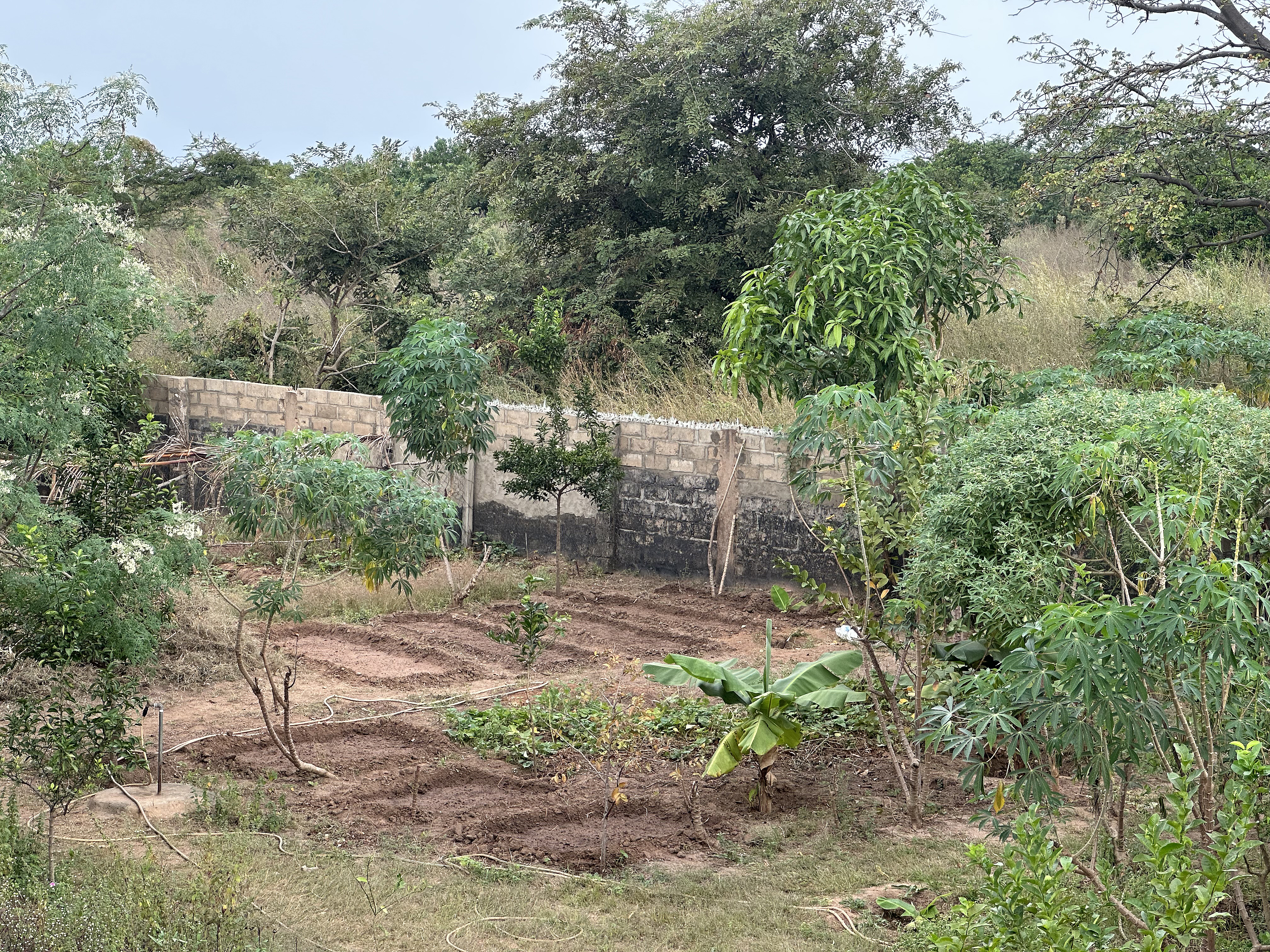
prepared flowerbeds, carefully leveled and ready for the next stage.
tomato and onion seedlings are on the way.
Saturday, 6
Congratulations to RAW Material Company for winning a Gold Award at the art basel Awards in Miami. i learned about this wonderful news through Marie-Hélène Pereira, who has long been one of the key figures in shaping RAW's curatorial vision. having joined the institution in its early years, she helped to develop many of the exhibitions, research initiatives and pedagogical platforms that have become central to RAW's identity. her work reflects the spirit of critical inquiry and cultural engangement that founder Koyo Kouoh set in motion. her continued involvement is a testament to the institution's commitment to thoughtful and rigorous practice.
RAW has grown into one of the most vital contemporary art institutions in Africa, shaping cultural discourse from Dakar with vision, courage and integrity. this award is a well-deserved acknowledgement of the remarkable ecosystem of artists, curators, and thinkers who have nutured it over the years.
Friday, 5
i occasionally write about my former classmate, Ute Meta Bauer.
something in our distance troubles me—we were once close, and now our lives barely touch. she marked a chapter in mine more deeply she ever knew. our trip to New York, still flickers in my memory a quiet turning point. even later, after i had moved to Basel, we stayed in contact. years ago i subscribed to her newsletter to keep a faint thread.
there's something she shares with Simon Njami: both in their own moments, wondered why my work had passed unnoticed. Ute once wondered why Stampa had never heard of MALOLA. Simon mentioned gambia. their questions were brief, almost casual, yet they carried a kind of recognition.
i have always admired her path. envy never crossed my mind. she built her carreer step by step, with discipline and conviction. at HfbK Hamburg she already seemed pointed towards a horizon she could see clearly, whereas i only knew that i wanted to make art.
her Centre for Contemporary Art in Singapore is another world compared with my small project. i'm almost embarrassed to place them in the same sentence, but that's simply how our lives unfolded. different currents, different kinds of courage.
still, i think sometimes of visiting Singapore—of seeing her world, and maybe meeting her again.
Center for Contemporary Art Singapore
Thursday, 4
In addition, the poetics of Relation remains forever conjectural and presupposes no ideological stability. It is against the comfortable assurances linked to the supposed excellence of a language. A poetics that is latent, open, multilingual in intention, directly in contact with everything possible. Theoretician thought, focused on the basic and fundamental, and allying these with what is true, shies away from these uncertain paths.
Édouard Glissant, Poetics of Relation (p. 31). (Function). Kindle Edition.
i often feel incomplete for not having a clear direction or a fixed identity. but maybe my shifting thoughts, my hesitations, even my contradictions are not failures but the texture of a life lived in relation. in this sense, i am not lost—i am still becoming.
Wednesday, 3
Art Space Work of the Month
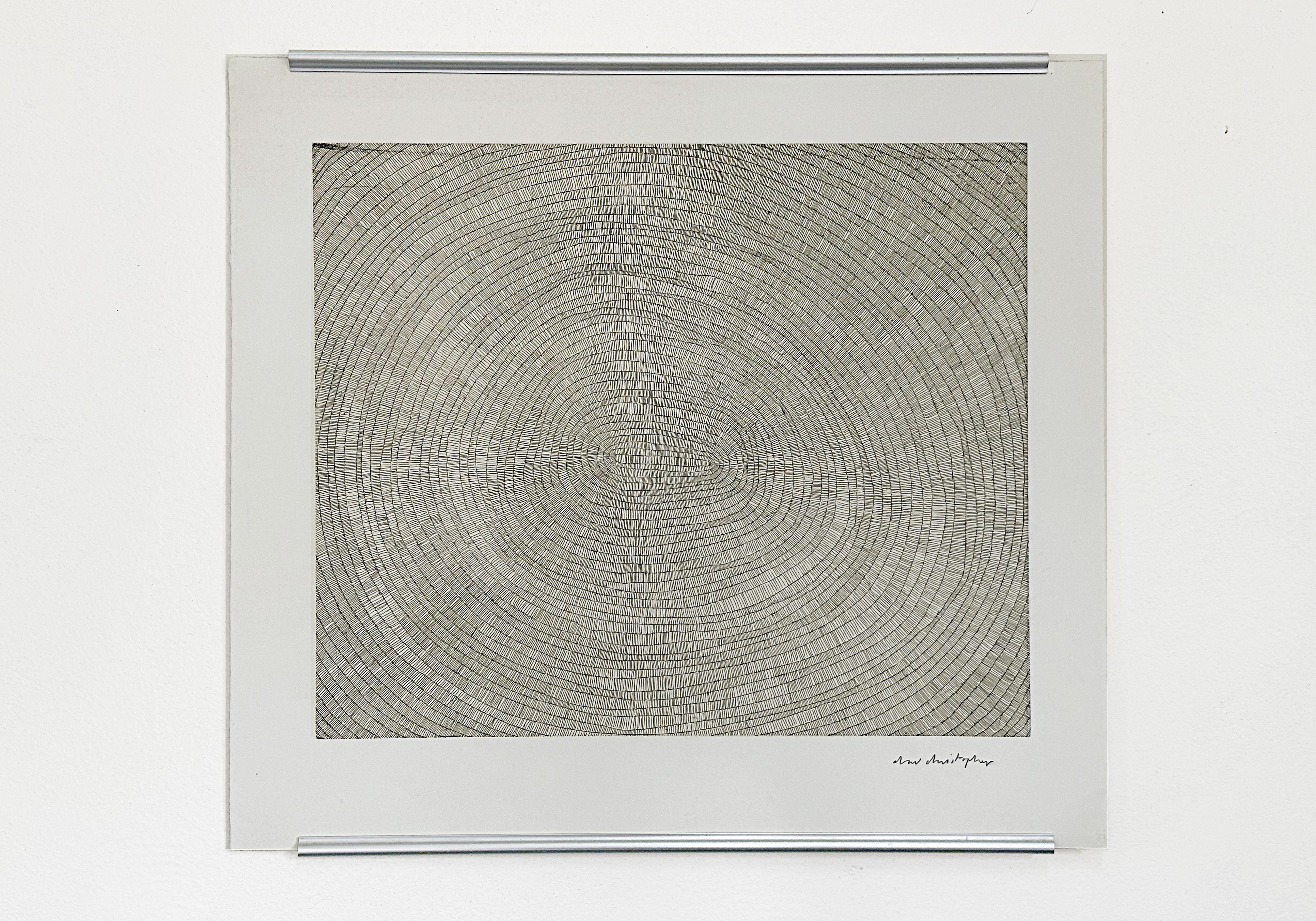 Olav Christopher Jenssen (1954), Untitled from the series Simultan, etching, 1995, 49,5 x 37,5 cm
Tuesday, 2
i'm a bit unsure how to describe my mood at the moment. not focused indeed.
it's been completely overcast for days, no sunshine.
Monday, 1
since i am not at the House of Culture Tintino, and therefore cannot select and install the corresponding work, the announcement of the Work of the
Month will be postponed until the day i return, probably wednesday or thursday..